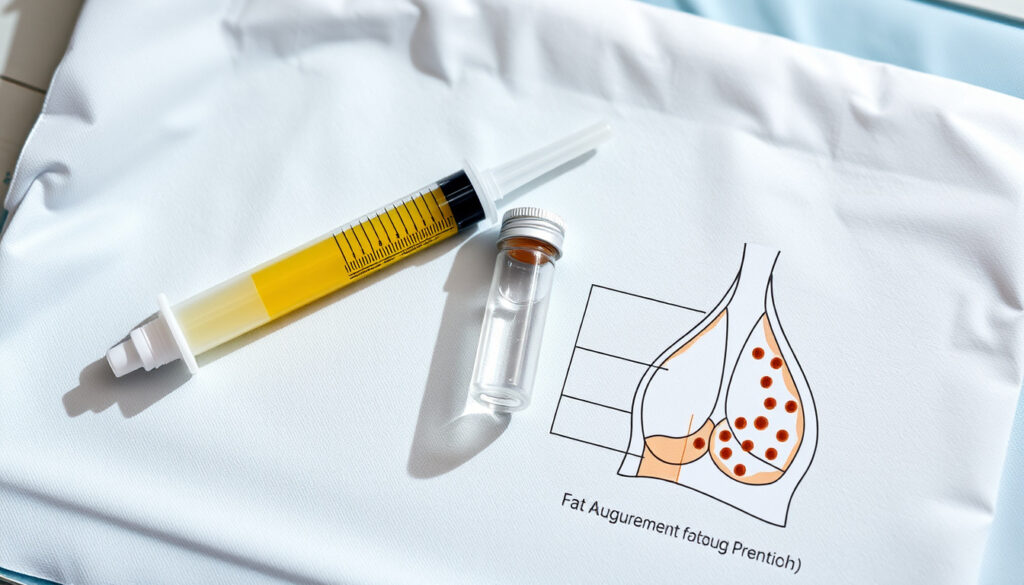
Fat Transfer Breast Augmentation: Costs, Longevity, Pros & Cons
Anyone who has ever felt uneasy about putting a foreign object into their body for cosmetic reasons already has a foot in the door with fat transfer breast augmentation. Instead of silicone or saline, this procedure uses your own fat cells — harvested from elsewhere on your body — to increase breast size. In Ireland, where clinic prices for a single session can range from €3,350 to well over €7,000, understanding exactly how long the results last and whether they compete with implants is the real question.
Average fat graft retention rate: 60–80% ·
Typical cost in Ireland: €4,000–€7,000 ·
Procedure duration: 1–2 hours ·
Number of sessions typically needed: 1–3 ·
Patient satisfaction rate: 80–90%
Quick snapshot
- Fat transfer uses autologous fat from liposuction (Cadogan Clinic (London-based cosmetic surgery specialist))
- Retention ranges from 60% to 80% per session (Dallas Liposuction (U.S. surgical practice))
- No risk of implant rupture or capsular contracture (Cadogan Clinic)
- Exact long-term retention beyond 5 years (Dallas Liposuction)
- Impact on future breast cancer detection accuracy — evidence is limited (Dallas Liposuction)
- Optimal age range for best outcomes — no consensus from major guidelines (Dallas Liposuction)
- Once transferred fat establishes blood supply, it behaves like normal breast tissue (Cadogan Clinic)
- Implants typically require replacement or revision after 10 to 20 years (Dallas Liposuction)
- Fat transfer is gaining traction as a no-foreign-material alternative (ULM Plastic Surgery (U.S. clinic))
- Future studies may clarify optimal technique for long-term retention (ULM Plastic Surgery (U.S. clinic))
Five key data points sum up the fundamentals of this procedure in the Irish context.
| Parameter | Value |
|---|---|
| Average fat retention | 60–80% |
| Typical cost in Ireland (per session) | €4,000–€7,000 |
| Number of sessions needed | 1–3 |
| Recovery time | 1–2 weeks down time |
| Procedure duration | 1–2 hours |
The numbers show a procedure that works, but the variance matters more than the average.
Irish patients who pursue fat transfer get a procedure that uses their own tissue, but they also face variable retention per session and a total bill that can exceed €7,000 when multiple rounds are needed. The trade-off with implants is clear: no future replacement surgery, but less predictable immediate volume.
How Long Does Fat Transfer Last for Breast Augmentation?
The durability question is the first one most patients in Ireland ask — and the answer depends more on biology than marketing. Fat graft survival rates in published literature range from 60% to 80% of the transferred volume, as documented by Dallas Liposuction (U.S. surgical practice). That means if a surgeon transfers 200 cc of purified fat, between 120 cc and 160 cc may survive long term.
What factors affect fat graft survival?
- Surgeon technique: Gentle harvesting, careful purification, and precise injection into well-vascularised breast tissue all improve retention.
- Patient physiology: Smokers and those with poor circulation typically experience lower survival rates.
- Donor fat quality: Fat harvested from the thighs or abdomen has been shown to have higher stem cell content, potentially improving graft take.
- Post-operative care: Avoiding compression on the breasts and maintaining stable weight helps preserve volume.
A patient in Dublin paying €5,000 for a session may only retain 60% of the visible improvement. That 40% loss is not a complication — it is biology. The decision to proceed should factor in the real possibility of a second session.
How many sessions are needed for optimal results?
Most patients require between one and three sessions spaced several months apart to achieve their desired cup size, according to providers like Venus Medical (Dublin-based cosmetic surgery clinic). Each session costs separately, so the total investment can climb quickly. Patients seeking a one-cup size increase are most likely to succeed with a single session.
The implication: fat transfer is not a single-payment solution for most women. The upfront cost per session in Ireland is comparable to implants, but the total may be higher if multiple rounds are needed.
Is a Fat Transfer to Breasts Worth It?
Worth depends on what a person prioritises. For patients who want to avoid foreign materials and prefer a natural look, the case is strong. For those seeking dramatic volume increase, implants still have the edge.
How does fat transfer compare to implants?
Five differences stand out, each carrying a specific consequence.
| Dimension | Fat transfer | Implants |
|---|---|---|
| Material | Your own fat cells | Silicone or saline shell |
| Maximum size increase | Modest (up to 1 cup size per session) | Large (2+ cup sizes possible) |
| Longevity | Permanent for surviving cells; 60–80% retention per session | 10–20 years before replacement needed |
| Scarring | Small liposuction incision only | Inframammary or peri-areolar incision |
| Risks | Fat necrosis, calcification, variable resorption | Capsular contracture, rupture, BIA-ALCL link |
The pattern is consistent: fat transfer trades predictability for naturalness.
Cadogan Clinic (London cosmetic surgery centre) notes that fat transfer “requires no additional maintenance once the fat has established a blood supply,” whereas implants “typically last between 10 and 15 years safely.” That maintenance-free promise is a real advantage — but only if the patient is satisfied with the more subtle result fat transfer delivers.
What is the best age for fat transfer?
There is no official age recommendation from the American Society of Plastic Surgeons (ASPS guidelines) specifically for fat transfer. However, the procedure is most effective when the patient has stable body weight and sufficient donor fat. Younger patients in their 20s and 30s who want a “natural” enhancement often make strong candidates, provided they are not planning significant weight loss, which would reduce the transferred volume.
How Much Does Breast Fat Transfer Cost in Ireland?
Irish clinics publish a wide range of prices, and the final number depends on whether the procedure is standalone or combined with other surgery.
- Moda Donna Medical lists breast augmentation with fat transfer from €3,350 (Moda Donna Medical (Dublin cosmetic clinic)).
- Amber Surgery prices the procedure at €3,700 (Amber Surgery (Irish clinic)).
- The Health Clinic offers fat transfer to breasts (lipofilling) from €3,890 (The Health Clinic (EU-based provider)).
- Aesthetic Institute shows breast augmentation from €6,800 (Aesthetic Institute (Dublin clinic)).
- Venus Medical states breast fat grafting can range from €5,000 to €10,000 or more (Venus Medical (Dublin clinic)).
- Auralia’s 2025 guide lists average breast augmentation cost in Ireland at €5,000 to €6,500 (Auralia (Irish cosmetic surgery guide)).
What influences the final price?
Three factors drive the variability:
- Clinic location and surgeon expertise: Dublin-based specialist clinics command higher fees.
- Anaesthesia fees and facility costs: Hospital-based procedures cost more than in-clinic surgery.
- Combined procedures: Fat transfer combined with a breast lift or abdominoplasty raises the total — Amber Surgery prices a combined fat transfer and abdominoplasty at €7,700 (Amber Surgery).
Is fat transfer cheaper than implants in Ireland?
Per session, fat transfer is similar to or slightly higher than implants. But implants have a hidden long-term cost: replacement surgery after 10–15 years. Fat transfer, if it survives, does not need maintenance. A patient in Ireland who pays €5,000 for one session of fat transfer and is satisfied may spend less over 20 years than someone who pays €5,500 for implants and then another €5,500 for replacement.
The pattern: per-session cost is comparable; lifetime cost favours fat transfer — but only if one session is enough.
What Is the Downside of Breast Fat Transfer?
No procedure is without drawbacks, and fat transfer has several that patients in Ireland should weigh carefully.
Upsides
- No foreign material — lower risk of capsular contracture (Cadogan Clinic)
- No implant rupture risk
- Natural look and feel
- Simultaneous body contouring from liposuction
Downsides
- Variable resorption — 20% to 40% volume loss per session
- Fat necrosis or oil cysts may form
- Calcifications can appear on mammograms, requiring additional imaging
- Not suitable for very thin patients with insufficient donor fat
- Multiple sessions often needed for desired size
The catch: fat transfer’s biggest strength (using your own tissue) is also its biggest weakness. It is unpredictable in a way that a silicone implant is not. The patient trades certainty of outcome for naturalness of material.
What are the common risks and complications?
Beyond the aesthetic downsides, clinical risks include infection, bleeding, and asymmetry. The most procedure-specific risk is fat necrosis — small areas of dead fat that can form palpable lumps. The American Society of Plastic Surgeons (professional body) considers autologous fat grafting safe when performed by qualified surgeons, but emphasises that “not all patients are good candidates.”
Are there long-term disadvantages?
One concern unique to Ireland’s screening system: calcifications from fat transfer can mimic microcalcifications seen in early breast cancer. A study from the National Institutes of Health (U.S. government research body) notes that radiologists need to be informed of prior fat grafting to avoid false alarms. This means the patient must disclose the procedure at every mammogram — a minor but permanent administrative burden.
How Successful Is Fat Autologous Transfer?
Success in fat transfer is defined by volume retention, patient satisfaction, and safety. On all three metrics, the data is encouraging for well-selected patients.
What is the patient satisfaction rate?
Published studies report satisfaction rates between 80% and 90% when patient selection is appropriate, according to research from the National Institutes of Health (U.S. research database). Patients report high satisfaction with the natural feel and absence of implant-related concerns.
Who is the ideal candidate for the best outcome?
The ideal candidate has:
- Stable body weight (no planned significant weight loss)
- Sufficient donor fat in thighs, abdomen, or flanks
- Realistic expectations (subtle enhancement, not dramatic increase)
- Good overall health and non-smoker status
Published studies show stable results up to five years with proper technique, as reported by Dallas Liposuction (U.S. surgical practice). Beyond five years, the evidence thins — most studies have shorter follow-up periods.
Very thin patients in Ireland may find that the cost of a single session (€4,000–€7,000) yields minimal visible change because there is simply not enough donor fat to harvest. For these candidates, implants remain the more reliable option.
Those interested in a natural alternative to implants can find a detailed guide on fat transfer breast augmentation outlining the procedure, costs, and expected results.
Frequently asked questions
What is the recovery like after breast fat transfer?
Most patients return to work within 5 to 7 days. Strenuous exercise should be avoided for 3–4 weeks. The liposuction areas may be sore longer than the breasts themselves.
Does fat transfer affect mammogram readings?
Yes. Calcifications from transferred fat can appear on mammograms. Always inform the radiologist about your fat grafting history before imaging.
Can I combine fat transfer with breast implants?
Yes. Some surgeons combine both to add natural-looking fullness around an implant. This is called composite breast augmentation. Discuss the added cost with your clinic.
How many sessions are typically needed for desired size?
One session is usually enough for a half-cup increase. Most patients need 1–3 sessions for a full cup size.
Will the transferred fat feel natural?
Yes. Once healed, the fat behaves like normal breast tissue. Most patients describe the feel as indistinguishable from natural breast tissue.
Is breast fat transfer painful?
Pain is generally mild to moderate. The liposuction areas can be tender for longer than the breasts themselves. Pain is usually managed with over-the-counter medication.
What areas are commonly used for fat harvest?
The most common donor sites are the thighs, abdomen, and flanks. Your surgeon will choose based on where you have the most accessible fat.
Related reading
- Kelly Osbourne Weight Loss: Grief, Surgery, and Ozempic
- What Does Testosterone Do? Function, Benefits, and Risks Explained
For the Irish patient weighing the options, the choice between fat transfer and implants is not about which procedure is “better” in the abstract — it is about which trade-offs fit your priorities. Fat transfer delivers natural, living tissue with no foreign material, but demands patience with retention rates and the real possibility of a second session. Implants give predictable volume with a known replacement timeline. In Ireland, where clinic prices for fat transfer average €4,000–€7,000 per session, the financial equation favours fat transfer only if one session is enough. Patients who want subtle, permanent enhancement and can accept the uncertainty of retention should pursue fat transfer. Those who want a guaranteed size increase with a single surgery should choose implants.
More related posts
 Apple At Home Support Job – Pay, Requirements and How to Apply
 It’s All Her Fault – Origin, Meaning and Cultural Impact
 Duke Energy Outage Map: How to Check, Report, and Get Updates
 Gabby’s Dollhouse: The Movie Showtimes – Where & When
 Cheapest Flights to Punta Cana: Best Months, Direct Airports & Tips
 The Moment 2026 Showtimes: Where to Watch & Tickets
 Vinland Saga Season 3: Status, Release Date, and What We Know
 What Time Are the Football Games On Today? TV Schedule