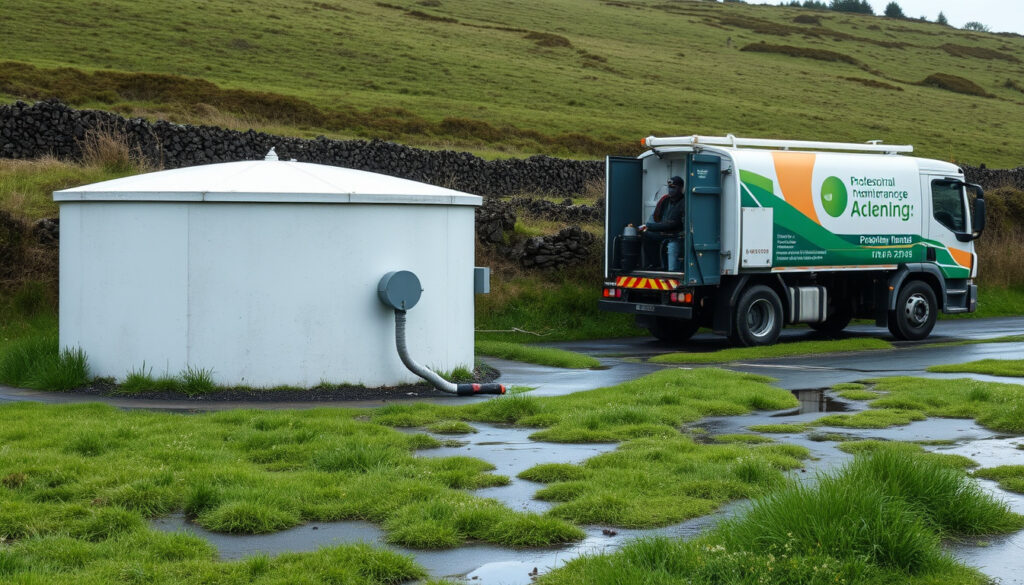
Septic Tank Cleaning Near Me: Costs & Signs (Ireland)
Anyone who relies on a septic tank in Ireland knows that feeling when the drains start running slower than usual. More than 500,000 households depend on septic systems, and the Environmental Protection Agency (EPA) recommends emptying every three to five years.
Average cost in Ireland: €200–€300 per cleaning ·
Recommended cleaning frequency: Every 3–5 years ·
Common sign of full tank: Slow draining fixtures ·
Households with septic tanks in Ireland: Over 500,000 ·
Inspection failure rate (2025): 59%
Quick snapshot
- Septic tanks need emptying every 3–5 years (EPA Ireland (national regulator))
- Typical cost €230–€300 in Ireland (Drain Away (Irish drainage service))
- Slow drains, odours, and wet ground are key signs (GRAF (wastewater specialist))
- Exact cost varies by tank size, accessibility, and region – no single national price (CES Environmental (Irish provider))
- Effectiveness of septic tank additives is debated among engineers (Checkatrade (UK trades platform))
- Whether DIY pump-out is safe or advisable – most pros advise against it due to health and disposal risks (CES Environmental (Irish provider))
- Septic tank registration became mandatory in Ireland by 1 February 2013 (BIO-ROCK (environmental technology))
- In 2025, 59% of inspected tanks failed EPA checks (RTÉ News (national broadcaster))
- More than 1,200 inspections per year are mandated (Catchments.ie (EPA-linked site))
- Homeowners can apply for grants to repair or upgrade failing systems (RTÉ News (national broadcaster))
Irish homeowners spend roughly €250 every 3–5 years on emptying, yet more than half of tanks fail inspection because of neglected maintenance. Regular cleaning is not optional — it is a legal and financial safeguard.
Here is a summary of the key data.
| Fact | Detail |
|---|---|
| Average cost in Ireland | €200–€300 (typically €230–€300 per emptying) |
| Recommended cleaning frequency | Every 3–5 years |
| Common sign of full tank | Slow draining fixtures, odours, wet ground |
| Households with septic tanks in Ireland | Over 500,000 |
| Inspection failure rate (2025) | 59% of inspected tanks failed |
| Mandatory yearly inspections | At least 1,200 per year |
| Installation cost (tank only) | €950–€5,200 |
| Installation cost (full system) | €2,500–€15,500 |
How much does it cost to clean a septic tank in Ireland?
Factors that affect septic tank cleaning cost
- Tank size: Larger tanks require more pumping time and waste disposal capacity, pushing the price upward. A typical domestic tank holds around 2,500–3,500 litres.
- Accessibility: Tanks buried deep, under paving, or in tight spaces need extra labour and equipment. Poor access can raise the bill by €50–€80.
- Location: Rural providers may charge a travel fee, while urban areas often have more competition and lower base rates.
One key pattern emerges: three variables — size, access, and region — explain most of the price variation. A straightforward emptying on easy ground will fall at the low end; a hard-to-reach tank in a remote area can top €350.
Average pricing in Ireland
Trusted Irish providers quote €230–€300 for standard domestic emptying. Drain Away (Irish drainage service) puts the range at €230–€280, while CES Environmental (Irish wastewater provider) quotes €240–€270. Kollect (Irish waste management platform) echoes that range at €230–€300. Installation, if needed, adds €1,500–€2,000 for the tank itself, plus groundworks (Sepcon (Irish wastewater specialist)).
The implication: get three quotes and ask specifically about access fees. A €50 difference between providers is common, but hidden charges for difficult access can double the gap.
How much is it to clean a septic tank near me?
How to get accurate quotes
- Search for local providers using terms like “septic tank emptying [your county]” or “septic tank cleaning near me”.
- Phone or email three providers — describe your tank size and access conditions to receive a firm price, not a vague estimate.
- Ask whether the quoted price includes disposal fees, VAT, and travel. Some operators add 13.5% VAT after the quote.
Getting a reliable price is about specificity. If you say “standard domestic tank” without details, you may be quoted the low end and then surprised by extras. CES Environmental (Irish provider) advises that transparency on access and tank size is the best way to lock in a fair rate.
Comparing local providers
Prices shift by county. In Louth, Meath, or Dublin, you might find several providers competing, while a remote part of Kerry may have only one or two, raising costs by 15–20%. The GRAF (wastewater specialist) notes that regional variance is a major factor. The catch: the cheapest quote is not always the best — some low-cost operators cut corners on waste disposal. Check if the provider is registered with the local authority and disposes of sludge at an approved facility.
When comparing “septic tank emptying prices Louth” or “septic tank emptying Dundalk”, ask the provider how they handle disposal. Licensed hauliers will include a waste manifest — that paper is your proof of legal disposal.
The pattern: getting a transparent, all-in quote upfront eliminates surprises and reveals which operators take compliance seriously.
What are signs that your septic tank is full?
Common symptoms of a full septic tank
- Slow drains: Sinks, showers, and toilets empty slower than usual. This is often the first clue.
- Unpleasant odours: A foul smell near the tank or drains indicates gases escaping from an overfull tank.
- Wet ground: Spongy or soggy patches around the tank area suggest liquid is seeping out of the drainage field.
- Gurgling sounds: When water runs, gurgling from pipes means air is being displaced by rising wastewater.
These signs mirror what GRAF (wastewater specialist) and Drain Away (Irish drainage service) list as the top indicators.
When to call a professional
If you notice sewage backup into your house or a strong, persistent smell inside, stop using water immediately and call a licensed emptier. Backups can damage your drainage field, costing thousands to replace (Catchments.ie (EPA-linked site)).
Why this matters: ignoring early signs often leads to an EPA inspection failure. Over half of inspected tanks fail, and lack of regular desludging is the primary culprit.
Can I use fairy dishwasher tablets with a septic tank?
How dishwasher tablets affect septic systems
- Fairy dishwasher tablets contain strong surfactants and enzymes that can kill beneficial bacteria in your septic tank.
- The bacteria are essential for breaking down solid waste — without them, solids accumulate faster and your tank fills sooner.
- Plastic pod casings do not fully dissolve in all septic systems and can clog pipes.
GRAF (wastewater specialist) advises that any product labelled “antibacterial” or containing bleach should be used sparingly.
Safe alternatives
- Look for dishwasher tablets labelled “septic safe” — these use biodegradable surfactants that do not harm the bacterial colony.
- Liquid dishwasher detergents are often gentler than powder or pod forms.
- Use the minimum recommended amount — overdosing with any detergent stresses the system.
The trade-off: septic-safe detergents are sometimes less effective on tough grease, but a quick pre-rinse compensates without damaging your tank.
What’s the worst thing for a septic tank?
Items that damage septic tanks
- Non-biodegradables: Wet wipes, sanitary products, nappies, and condoms do not break down and fill the tank rapidly.
- Chemicals: Bleach, paint thinners, drain cleaners, and pesticides destroy the bacterial ecosystem.
- Grease and oil: Fats solidify and clog pipes and the percolation area.
- Food waste from garbage disposals: Adds excess solids and fat that the tank cannot process.
Proper waste disposal
EPA Ireland (national regulator) explicitly says only human waste and toilet paper should go down the drain. Coffee grounds, cigarette butts, and cat litter should always go in the bin.
The pattern: most tank failures stem from what homeowners flush, not from the tank itself. Training all household members to treat the septic system like a biological processor — not a garbage can — is the cheapest maintenance you can do.
Irish homeowners: get your tank emptied every 3–5 years for €230–€300. Watch for slow drains and smells. Use septic-safe detergents. And never flush wipes — they cost far more to remove than a cleaning visit.
The implication: what you flush determines your tank’s lifespan. Keep it simple: only waste and paper.
How to find septic tank cleaning near you in Ireland (step by step)
- Search locally: Use terms like “septic tank cleaning Meath” or “septic tank emptying Drogheda” to find providers in your county.
- Check licensing: Verify the provider is registered with your local authority to transport and dispose of septic waste.
- Get three quotes: Ask each for an all-in price including VAT and disposal. Compare not just cost but reputation — check Google reviews or ask neighbours.
- Schedule before the tank is full: Book every 3–5 years, or sooner if you notice signs. Don’t wait for an emergency.
- Prepare access: Clear the tank lid area of soil, grass, or debris. Ensure the tank lid is accessible and not buried.
Following these steps turns a stressful search into a routine task. CES Environmental (Irish provider) notes that pre-planning can save you €50–€100 in emergency call-out fees.
What we know — and what’s still debated
Confirmed facts
- Septic tanks need pumping every 3–5 years (EPA Ireland (national regulator))
- Slow drains and odours are reliable early warning signs (GRAF (wastewater specialist))
- Cost ranges €230–€300 for standard emptying in Ireland (Drain Away (Irish drainage service))
What’s unclear
- Exact price per tank varies too widely for a single average – always get a local quote
- Septic tank additives: some engineers say they help, others say they are a waste of money (Checkatrade (UK trades platform))
- Whether DIY cleaning (e.g., using a submersible pump) is safe or advisable – most pros strongly advise against it
- Whether harsh chemicals and non‑biodegradables always cause damage depends on volume and frequency – no universal threshold
The takeaway: the cost is clear, but some maintenance advice remains unsettled. Rely on official EPA guidance for the essentials.
What experts and regulators say
“Septic tanks should be desludged every three to five years to prevent blockages and environmental pollution.”
— EPA Ireland (national regulator)
“We see a lot of tanks that have not been emptied in over a decade. The cost of a clean is tiny compared to the cost of a new percolation area.”
— Local service provider quoted in Drain Away (Irish drainage service)
“Almost 60% of septic tanks inspected last year failed. The common thread is a lack of maintenance — simple emptying would fix most.”
These voices underline the importance of regular maintenance. Neglect is the single biggest cause of failure.
Summary: your next move
Irish homeowners with septic tanks face a straightforward choice: schedule a €250 emptying every three to five years, or risk an EPA inspection failure that could cost thousands in repairs. The evidence from regulators and service providers is clear — regular maintenance is cheap insurance. For anyone searching “septic tank cleaning near me”, the smart move is to book the emptying before the slow drains start, and to check the provider’s disposal licence before they arrive. For homeowners in Louth, Meath, or Dublin, the choice is clear: find a licensed provider now, or pay for a new drainage field later.
Related reading: Septic Pumping Near Me: Costs, Signs & Ireland Services · Cleaning Services Near Me: Costs & 20-Minute Rule
For a detailed breakdown of typical prices and warning signs, check out this guide on septic tank pumping costs and signs in Ireland.
Frequently asked questions
How do I maintain my septic tank between cleanings?
Limit harsh chemicals, flush only toilet paper and human waste, and avoid pouring grease down the sink. Have the tank inspected visually every year to check the sludge level.
What is the best time of year to clean a septic tank?
Spring or early autumn, when the ground is dry and the tank is not frozen. Avoid periods of heavy rain, as waterlogged ground makes access harder and the tank may be fuller than normal.
Do I need to be home during septic tank cleaning?
Yes — you or a responsible adult should be present to show the technician where the tank is located and to confirm the work is done correctly.
Can a septic tank be cleaned in the rain?
It can, but heavy rain soaks the ground and may make the tank lid hard to reach. The service provider may charge extra for difficult access in wet conditions.
How long does a septic tank cleaning take?
Typically 30 to 60 minutes for a standard domestic tank, depending on access and the volume of sludge.
What happens to the waste after cleaning?
The provider pumps the sludge into a tanker and delivers it to a licenced wastewater treatment facility for processing. You should receive a waste disposal receipt as proof.
Is it safe to use bleach in a septic tank?
Small amounts of bleach used occasionally are tolerable, but regular or heavy use will kill the beneficial bacteria that break down solids. Choose septic-safe cleaning products instead.
These answers should help you manage your system proactively.
Related reading: Septic Pumping Near Me: Costs, Signs & Ireland Services · Cleaning Services Near Me: Costs & 20-Minute Rule
More related posts
 Harry Potter and the Cursed Child Movie: Status & Facts
 Rosemarie DeWitt Movies and TV Shows Guide
 How Many Ounces in a Quart? US, UK, and Dry Quart Conversions
 Low Taper Curly Hair: How to Style & Ask Your Barber
 2025 Toyota RAV4 Hybrid – Specs, Trims and Pricing Guide
 It’s All Her Fault – Origin, Meaning and Cultural Impact
 US Teacher Appreciation Day 2025 – Date, History and Celebration Ideas