Most Dangerous Animal in the World: Ranked by Deaths
The title of most dangerous animal in the world doesn’t belong to a sharp-toothed predator. It belongs to an insect you’ve probably swatted away without a second thought. While lions and sharks grab headlines, the real killers are often tiny, flying, or hiding in plain sight. This ranking strips away fear and reputation, using confirmed annual human death tolls to reveal which animals truly pose the biggest threat.
Deadliest overall (annual deaths): Mosquito ~725,000–760,000 ·
Second deadliest (homicides only): Humans ~400,000 ·
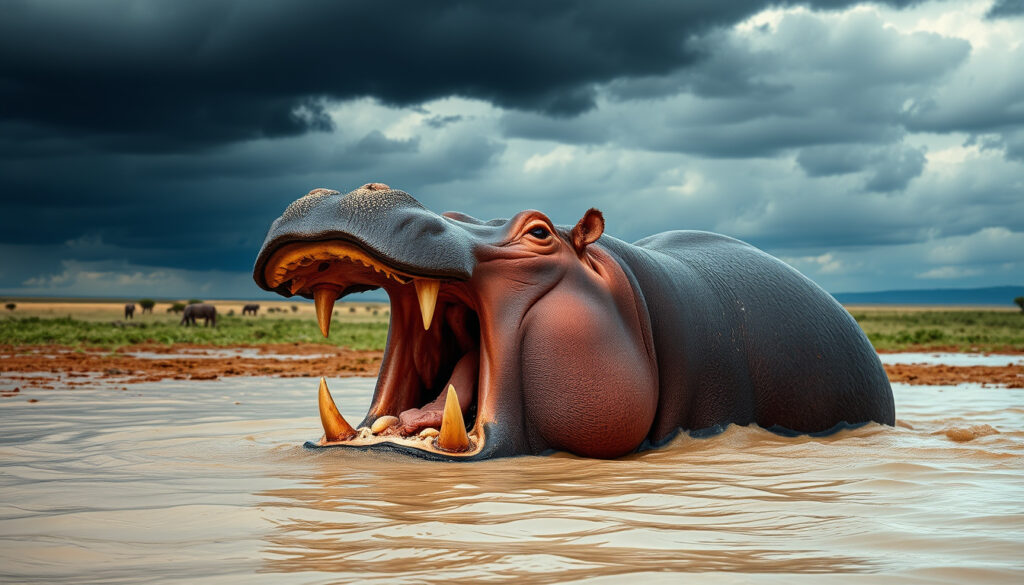
Deadliest mammal (excl. humans): Hippopotamus ~500 ·
Deadliest snake: Saw-scaled viper (part of 138,000 snake deaths) ·
Deadliest large predator: Crocodile ~1,000
Quick snapshot
- Mosquito: 725,000+ (Our World in Data (academic research institute))
- Human: 400,000 (Our World in Data)
- Snake: 138,000 (Discover Wildlife (wildlife magazine))
- Hippopotamus: attacks without provocation (Discover Wildlife)
- Saltwater crocodile: territorial killer (Our World in Data)
- African buffalo: known to ambush hunters (Wikipedia (public encyclopedia))
- Shark: only 6 deaths/year but high fear (Our World in Data)
- Lion: ~300 deaths/year from big cats (Our World in Data)
- Wolf: ~5 deaths/year (Our World in Data)
- Mosquito: vector for malaria, dengue, etc. (World Health Organization (UN health agency))
- Tsetse fly: ~1,500 deaths/year from sleeping sickness (Our World in Data)
- Assassin bug: ~8,000 deaths/year from Chagas disease (Our World in Data)
| Attribute | Value |
|---|---|
| Deadliest animal overall | Mosquito (725,000–760,000 deaths/year) |
| Deadliest mammal (excl. humans) | Hippopotamus (~500 deaths/year) |
| Deadliest snake | Saw-scaled viper (part of 138,000 snake deaths/year) |
| Deadliest large predator | Crocodile (~1,000 deaths/year) |
| Most aggressive animal (attacks without provocation) | Hippopotamus |
What animal kills the most humans in the world?
Mosquitoes as disease vectors
The mosquito holds the grim top spot by spreading parasites and viruses that claim hundreds of thousands of lives annually. According to Our World in Data (academic research institute), mosquitoes kill about 760,000 people every year. The World Health Organization notes that malaria alone accounted for 608,000 deaths in 2022, with children under five bearing the heaviest toll.
Annual death toll from malaria and other mosquito-borne illnesses
Other illnesses such as dengue fever, yellow fever, and Zika add to the count. Discover Wildlife places the mosquito death range between 725,000 and 1,000,000 per year. Mosquitoes are not predators that attack directly, but their role as disease vectors makes them the undisputed #1 killer among all animals.
A single mosquito species, Anopheles gambiae, transmits the malaria parasite. Without ongoing vector control programs, the annual death toll could spike dramatically.
The implication: mosquitoes kill more people in a single day than sharks have killed in the past century. Yet they receive a fraction of the media fear budget.
What are the 10 deadliest animals on Earth?
Ranking by annual human deaths reveals a clear hierarchy. One pattern: the deadliest animals are mostly small, disease-carrying creatures, not large predators.
| Rank | Animal | Estimated annual deaths (source) |
|---|---|---|
| 1 | Mosquito | 725,000–760,000 (Our World in Data) |
| 2 | Human (homicide) | ~600,000 (Our World in Data) |
| 3 | Snake | 100,000–138,000 (Discover Wildlife) |
| 4 | Dog (rabies) | ~40,000 (Our World in Data) |
| 5 | Tsetse fly | ~1,500 (Our World in Data) |
| 6 | Assassin bug (Chagas) | ~8,000 (Our World in Data) |
| 7 | Freshwater snail | ~14,000 (Our World in Data) |
| 8 | Crocodile | ~1,000 (Our World in Data) |
| 9 | Hippopotamus | ~500 (Discover Wildlife) |
| 10 | Elephant | ~1,000 (Our World in Data) |
Mosquito, human, snake, dog, tsetse fly, assassin bug, snail, hippo, crocodile, elephant
Snakes kill around 138,000 people per year, with the saw-scaled viper being the deadliest snake species due to its aggressive nature and wide distribution in populated areas of Asia and Africa (Discover Wildlife). Dogs (rabies) kill about 40,000 people annually. Crocodiles and hippos represent the deadliest large animals, each responsible for hundreds to over a thousand deaths per year.
What is the most dangerous animal in the world other than mosquitoes?
Humans (homicides) as second deadliest
If we exclude disease vectors, the deadliest animal to humans is actually humans themselves. Our World in Data records roughly 600,000 homicides annually worldwide. That’s more than any animal except mosquitoes. Conflict and violence elevate Homo sapiens to the #2 spot on the deadliness list.
Snakes as third deadliest
Snakes come next, with an estimated 100,000 to 138,000 deaths per year. The saw-scaled viper is the deadliest snake; it thrives in densely populated regions and is responsible for the most snakebite fatalities (Discover Wildlife). Tsetse flies kill about 10,000 people per year, though estimates vary.
The catch: when people ask about “dangerous animals,” they usually mean physical confrontation. But the data shows that the most “dangerous” animals are those that transmit disease, not those that attack directly.
Why is Hippo not in the Big 5?
Origin of the Big 5 term
The “Big Five” was originally a hunting term used in Africa to refer to five animals that were the most difficult to hunt on foot: lion, leopard, elephant, rhinoceros, and Cape buffalo (Wikipedia). Hippos are not part of this group because they were not traditionally hunted as trophies, despite being extremely dangerous.
Hippo danger level vs Big 5 animals
Hippos kill an estimated 500 people per year in Africa, more than any Big Five member (Discover Wildlife). They are highly territorial and aggressive, and are known to capsize boats and attack without provocation. The term “Big Five” reflects old trophy hunting criteria, not actual lethality.
Hippos are statistically deadlier than lions and leopards combined, yet they don’t make the “Big Five” list. Conservationists now use the term to promote wildlife tourism, not danger.
What animals see humans as food?
Man-eating predators
While most animals avoid humans, a few species view people as potential prey. Crocodiles are responsible for about 1,000 deaths per year, making them the deadliest large predator (Our World in Data). Tigers have killed hundreds in the Sundarbans mangrove forest of India and Bangladesh (Discover Wildlife). Lions, polar bears, and large crocodilians occasionally hunt humans, but such incidents are rare compared to disease-related deaths.
Sharks kill only about 6 people per year globally (Our World in Data), yet they dominate the public perception of man-eaters. The fear is vastly disproportionate to the actual risk.
Clarity check: what is confirmed and what remains uncertain
Confirmed facts
- Mosquitoes are the deadliest animal to humans by annual death toll (725,000–760,000).
- Humans are the second deadliest animal (homicides ~600,000).
- Snakes kill approximately 138,000 people per year.
- Dogs cause ~40,000 deaths annually from rabies.
- Hippos kill more humans than any Big Five member.
What’s unclear
- Exact annual death toll for hippos is uncertain due to underreporting in remote areas.
- Aggression rankings are subjective and vary by source.
- Some disease vector numbers (e.g., tsetse flies) come from modeling and may vary.
Expert perspectives
“Mosquitoes have been the biggest killer of humans for millennia, causing hundreds of millions of deaths throughout history.”
– Hannah Ritchie, lead researcher at Our World in Data
“The saw-scaled viper is arguably the deadliest snake in the world, responsible for more human deaths than any other snake species.”
– Discover Wildlife
“When you look at the death toll data, humans are second only to mosquitoes. We are our own worst enemy.”
The data is clear: the most dangerous animal in the world is not a lion, shark, or crocodile. It’s the mosquito — a tiny insect that harnesses disease to wreak a devastating toll. For governments and health organizations, the implication is straightforward: funding for vector control and vaccine distribution is not optional; it’s a life-or-death priority. Investment in malaria prevention alone could save hundreds of thousands of lives each year.
Related reading: Deadliest animals ranked by annual human deaths · Deadliest animals to humans comparison
africa-safaris.com, docs.owid.io, facebook.com, en.wikipedia.org, cnet.com
While many imagine lions or sharks, the most dangerous animal in the world is actually the mosquito, as detailed in this mosquito death toll ranking of annual human fatalities.
Frequently asked questions
What is the most dangerous animal in the world to humans?
The mosquito is the deadliest animal to humans, causing an estimated 725,000 to 760,000 deaths per year through diseases like malaria and dengue.
Which animal kills the most people every year?
Mosquitoes top the list. According to Our World in Data, they kill about 760,000 people annually.
What is the deadliest animal in Africa?
The mosquito is also the deadliest in Africa due to malaria. Among mammals, the hippopotamus kills the most humans — about 500 per year.
Are hippos more dangerous than lions?
Yes. Hippos kill roughly 500 people annually, while all big cats (lions, leopards, etc.) kill about 300 per year combined.
What animal is called a silent killer?
The mosquito is often called the silent killer because it kills without a direct attack, transmitting deadly diseases quietly.
Do mosquitoes kill more people than snakes?
Yes. Mosquitoes kill about 5 to 6 times more people than snakes (138,000 snake deaths versus 760,000 mosquito deaths).
What is the most dangerous animal in the world not including mosquitoes?
Humans are the second deadliest (homicides). Snakes are third, followed by dogs (rabies) and then large animals like hippos and crocodiles.
More related posts
 Which of the Following: Meaning, Usage, and Grammar Guide
 SSI Payments May 2025: Dates, Amounts & Double Check
 Teen Jobs Near Me: 2025 Guide for 14, 15 & 16 Year Olds
 49ers vs Colts Match Player Stats – Week 16 Box Score Breakdown
 Yves Saint Laurent Perfume: Popular, Long Lasting & Cheap
 How Many Ounces in a Pound – Avoirdupois vs Troy Explained
 Best Pollo Guisado Near Me: Find Authentic Latin Chicken Stew
 2014 Jeep Grand Cherokee: Problems, Price & Reliability