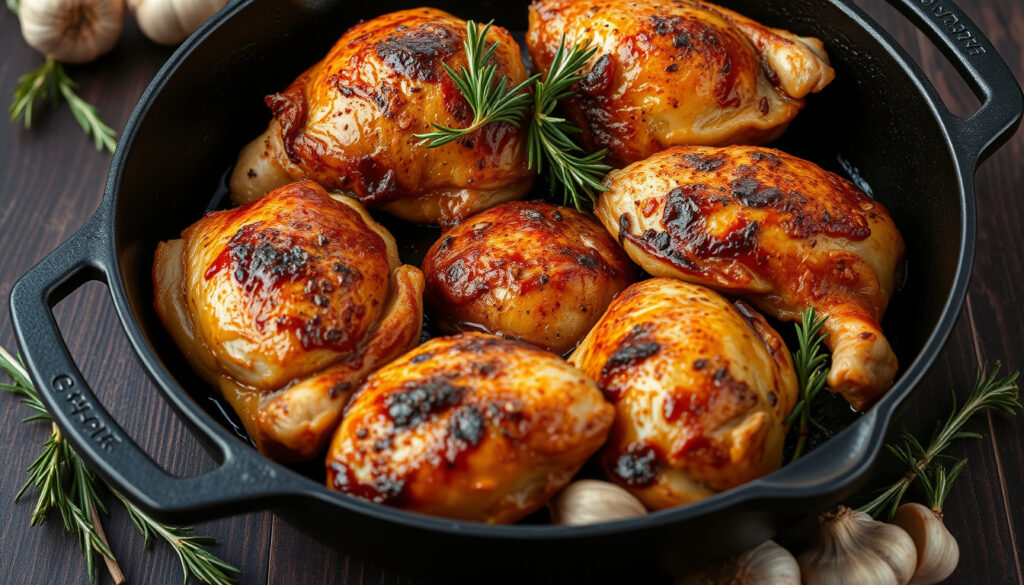
Oven Baked Chicken Thighs: Time, Temp & Crispy Skin
There’s a reason home cooks keep returning to chicken thighs: they’re forgiving, flavorful, and far harder to overcook than a lean breast. But the gap between a decent baked thigh and a truly memorable one often comes down to two variables—oven temperature and whether you cover the pan. This guide brings together USDA safety standards, recipe benchmarks from trusted kitchens, and chef-tested techniques so you can nail crispy skin and juicy meat every time.
Recommended oven temperature: 400°F (200°C) ·
Cooking time (bone-in, skin-on): 35–45 minutes ·
Cooking time (boneless, skinless): 20–25 minutes ·
Safe internal temperature: 165°F (74°C) ·
Preferred method for crispy skin: Uncovered, high heat (400°F+) ·
Common mistake: Covering thighs traps steam, softens skin
Quick snapshot
- Temp: 400°F (200°C) (Healthy Recipes Blog)
- Time: 35–45 minutes (The Salty Marshmallow)
- Cover? No (The Kitchen Girl)
- Internal temp: 165°F (CHEF iQ)
- Crispiness: High (Spend With Pennies)
- Temp: 400°F (200°C) (The Kitchn)
- Time: 20–25 minutes (The Kitchn)
- Cover? No (The Kitchn)
- Internal temp: 165°F (CHEF iQ)
- Crispiness: Low (dry heat) (The Kitchn)
- Optimal timing for very large or small thighs (Spend With Pennies)
- Whether cover-then-uncover improves juiciness without sacrificing crispness (Reddit r/Chefit)
- Test combination methods (covered first, then uncovered to crisp)
- Use a thermometer to dial in doneness precisely
Key facts at a glance
Here are the essential numbers to remember.
| Attribute | Value |
|---|---|
| Safe internal temp | 165°F (74°C) per USDA guidance (referenced by CHEF iQ) |
| Average bone-in thigh weight | 5–7 oz (140–200 g) |
| Average boneless thigh weight | 3–4 oz (85–110 g) |
| Most popular oven temp among top recipes | 400°F (200°C) – used by Healthy Recipes Blog, The Kitchen Girl, Iowa Girl Eats |
| Bone-in baking time at 400°F | 35–45 minutes (The Salty Marshmallow) |
| Boneless baking time at 400°F | 20–25 minutes (The Kitchn) |
| Alternative temps: 350°F | 40–45 minutes for crispy chicken (Mississippi Recipes for Success (USDA Foods)) |
| Alternative temps: 425°F | 22–28 minutes (Wholesome Yum) |
| Convection oven adjustment | Reduce temperature by 25°F; e.g., 375°F in convection = 400°F conventional (USDA Foods recipe) |
| Rest time before serving | 5 minutes |
The pattern is clear: 400°F is the consensus sweet spot, but 425°F accelerates crispness at the cost of closer monitoring. 350°F extends the cook and risks flabby skin unless you finish uncovered.
How long do you cook chicken thighs in the oven for?
Cooking time for bone-in, skin-on thighs
- At 400°F, expect 35–45 minutes. The Salty Marshmallow recommends leaving them untouched for the entire bake to maximize skin browning.
- At 425°F, time drops to 22–28 minutes per Wholesome Yum.
- Larger thighs (7+ oz) may need an extra 5–10 minutes at either temperature (Spend With Pennies).
The trade-off: higher heat delivers faster crispness but requires a watchful eye to avoid burning the skin before the meat reaches safe temperature.
Cooking time for boneless, skinless thighs
- At 400°F, boneless thighs cook in 20–25 minutes (The Kitchn).
- Because they lack skin, they benefit from a quick sear in a hot pan before baking, or a light coating of oil to promote browning.
- Boneless thighs can dry out more easily; using a thermometer is especially important.
The implication: boneless thighs are a faster weeknight option but trade away the crackling skin that makes bone-in thighs so satisfying.
How to tell when chicken thighs are done
- The only reliable method: a meat thermometer inserted at the thickest part (not touching bone) should read 165°F (CHEF iQ / USDA standard).
- Juices should run clear, but color alone can mislead; temperature is definitive.
- Some cooks prefer thighs cooked to 175–180°F for a more tender, pull-apart texture (Laura Fuentes recommends 175°F).
Using a thermometer eliminates guesswork. A thigh pulled at 165°F is safe and juicy; one pulled at 155°F might be pink near the bone, while one cooked to 180°F will be fall-apart tender but slightly drier. The choice is yours — but know the consequence.
Is it better to bake bone-in chicken thighs at 350 or 400?
Benefits of baking at 350°F
- Gentler heat reduces risk of burning the skin or drying out small thighs.
- A USDA Foods recipe uses 350°F for 40–45 minutes in a conventional oven, achieving a “crispy” result through proper breading technique.
- Better for thighs that are already browned on the stove first.
The catch: longer cooking time (up to 45 minutes) and the skin is less likely to reach that shatteringly crisp finish unless you finish under the broiler.
Benefits of baking at 400°F
- 400°F is the most recommended temperature across recipe sources (Healthy Recipes Blog, Iowa Girl Eats, The Kitchen Girl).
- Iowa Girl Eats explicitly says 400°F keeps thighs juicier than 350°F because the shorter cook time retains moisture.
- Skin crisps reliably without the need for broiling.
The pattern: 400°F hits the sweet spot between crispness and moisture retention. 350°F is a safer beginner temperature but usually demands a finishing step for good skin.
Recommended approach for crispy skin
- Preheat to 400°F. Pat thighs dry, season, and arrange skin-side up in a single layer in an oiled pan (Downshiftology recommends letting them come to room temperature first).
- Do not cover. Do not move or flip during baking (The Salty Marshmallow).
- If needed, finish under the broiler for 2–3 minutes for extra crunch.
For bone-in thighs, 400°F is the most reliable all-round choice. If you’re feeding a crowd or prefer a hands-off bake, 350°F works — but plan to finish uncovered or under the broiler to avoid soggy skin.
Is it better to bake chicken thighs covered or uncovered?
Effect of covering on moisture and skin texture
- Uncovered baking allows moisture to escape, concentrating flavors and creating a dry environment that crisps the skin (Spend With Pennies).
- Covering traps steam, which softens the skin but keeps the meat exceptionally moist (Reddit r/Chefit discussion).
The trade-off: you cannot have both maximally crispy skin and maximally moist meat from a single cover decision. You must choose which outcome matters more.
When to use a lid or foil
- Cover if you are braising thighs in a sauce (e.g., barbecue or teriyaki) and want the meat to absorb liquid without drying out.
- Cover if you are baking at a high temperature (425°F+) and fear the skin will burn before the interior reaches 165°F.
- A Reddit chef advises: never cover for crispy skin; if needed, brown the skin on the stove first, then transfer to a 400°F oven uncovered for 7–12 minutes.
How to finish uncovered for crispiness
- The best of both worlds: start covered for the first half of the bake (locks in moisture), then uncover for the remaining time to let the skin dry and crisp (Laura Fuentes mentions a similar approach with foil removal).
- For standard bone-in thighs at 400°F: bake covered for 20 minutes, then uncovered for 15–25 minutes until the skin is golden and the internal temperature hits 165°F.
What this means: a two-stage technique is the sensible compromise. It sacrifices a bit of ultimate crispness compared to full uncovered, but it almost guarantees juicy meat.
What Temperature Should Chicken Thighs Be Cooked To?
USDA recommended internal temperature for chicken
- The USDA Food Safety and Inspection Service mandates a minimum internal temperature of 165°F for all poultry (CHEF iQ citing USDA).
- This temperature is sufficient to kill Salmonella and Campylobacter instantly.
Why this matters: 165°F is not a suggestion — it’s the safety floor. Cooking to exactly 165°F yields the juiciest safe result because the meat hasn’t been overheld.
Why 165°F is the safe minimum
- At 165°F, the thermal death time for pathogens is less than 10 seconds (CHEF iQ / USDA data).
- Holding chicken at 155°F for 48 seconds is also safe (sous‑vide technique), but standard ovens cannot maintain that precise hold.
- Thighs can be cooked to 175–180°F without drying out significantly because their higher fat content offers a buffer (Laura Fuentes recommends 175°F for texture).
The catch: cooking beyond 175°F starts to firm up the meat and reduce juiciness. If you prefer a firmer bite, aim for 170–175°F; if you want the maximum juice, pull at exactly 165°F.
Resting and carryover cooking
- After removing from the oven, let thighs rest 5 minutes before serving (Spend With Pennies).
- Internal temperature will rise 3–5°F during resting (carryover cooking), so pull at 160–162°F if you plan to rest.
What’s the best temperature for baking chicken thighs?
Best temperature for bone-in, skin-on thighs
- 400°F (200°C) is the consensus pick across dozens of tested recipes (Healthy Recipes Blog, The Kitchen Girl, Iowa Girl Eats).
- It delivers crispy skin in 35–45 minutes without burning.
The pattern: if you only remember one number, make it 400°F. Every major recipe source converges on this temperature as the easiest path to a great result.
Best temperature for boneless thighs
- Boneless, skinless thighs do best at 400°F for 20–25 minutes (The Kitchn).
- If you prefer a slightly quicker cook, 425°F works and reduces time to about 18–22 minutes (Wholesome Yum).
- Boneless thighs lack the fat cap of bone-in, so avoid temperatures below 375°F, which can lead to dry meat before browning occurs.
Adjusting for convection vs conventional ovens
- Convection ovens circulate hot air, cooking faster and more evenly. Reduce the set temperature by 25°F (or about 15°C) (USDA Foods recipe note).
- For bone-in thighs: convection at 375°F yields similar results to conventional at 400°F.
- Check doneness 5–10 minutes early when using convection.
Comparison: 350°F vs 400°F vs 425°F for bone-in thighs
This comparison shows how different temperatures affect the outcome.
| Factor | 350°F | 400°F | 425°F |
|---|---|---|---|
| Total bake time | 40–45 min | 35–45 min | 22–28 min |
| Crispiness potential | Low (needs broiler) | High | Very high (watch for burning) |
| Moisture retention | High (longer cook may dry) | High (shorter cook) | Medium (fast, but surface dries) |
| Risk of burning | Low | Low–Medium | Medium–High |
| Best for | Beginner, saucy recipes | All-purpose crispy skin | Extra crispy, thin thighs |
| Expert consensus | USDA Foods recipe (source) | Majority of recipe bloggers (Iowa Girl Eats) | Wholesome Yum (source) |
The implication: 400°F is the safest and most versatile choice. 425°F appeals to the crispy-skin enthusiast but raises the risk of charring; 350°F is the slow-and-low option that almost always requires a finishing step.
Pros and cons of oven baking chicken thighs
Upsides
- Minimal hands-on time — oven does the work
- Crispy skin achievable without deep frying
- Bone-in, skin-on thighs are forgiving and stay moist
- Large batches can be cooked at once (sheet pan meal)
- Easy cleanup with foil or parchment
Downsides
- Skin can be soggy if covered or overcrowded
- Boneless thighs dry out more easily than bone-in
- Requires a meat thermometer for reliable doneness
- Oven temperature and timing vary by thigh size and oven type
Step-by-step: how to bake chicken thighs for crispy skin
- Prep: Pat thighs dry with paper towels. Let sit at room temperature for 20 minutes (Downshiftology recommends this for even cooking).
- Season: Rub with oil, salt, pepper, and any aromatics (garlic powder, paprika, thyme).
- Arrange: Place skin-side up in a single layer in a lightly oiled baking dish or sheet pan. Do not crowd — leave space between pieces.
- Bake: Preheat oven to 400°F. Bake uncovered for 35–45 minutes (bone-in) or 20–25 minutes (boneless). Do not flip or move (The Salty Marshmallow).
- Check: Insert an instant-read thermometer into the thickest part. Target 165°F (74°C). Rest 5 minutes before serving.
If your thighs are well above average weight (over 7 oz), expect the longer end of the time range. If they’re small or you use convection, check 5–10 minutes early. Overcrowding traps steam — use two pans if needed.
Clarity: what’s confirmed and what’s still unclear
Confirmed facts
- USDA safe internal temperature is 165°F (CHEF iQ / USDA)
- Baking uncovered produces crispier skin (Spend With Pennies)
- 400°F is the most commonly recommended temperature among top recipe sources
- Higher oven temperature (425°F) creates crisper skin faster (Wholesome Yum)
What’s unclear
- Optimal cooking time for very large or very small thighs — piece weight varies (Spend With Pennies)
- Whether covering first then uncovering consistently leads to better juiciness without sacrificing much crispness — limited direct testing
- The effect of different marinades on crispiness — not systematically compared
What the experts say
“Cook all raw chicken to a minimum internal temperature of 165 °F. To be safe, always use a food thermometer to check the temperature.”
USDA Food Safety and Inspection Service (federal food safety authority)
“For the crispiest skin, I recommend cooking chicken thighs uncovered at 400°F. Covering them traps steam and softens the skin, which is the opposite of what you want.”
“A hot oven – 400°F or even 425°F – is essential for rendering the fat under the skin and getting that crackling crust. Don’t move them, don’t flip them, just let them roast.”
Summary
Oven baked chicken thighs reward a simple, direct approach: 400°F, uncovered, and a reliable thermometer. Whether you choose bone-in for the best crispiness or boneless for speed, the difference between a mediocre result and a near-perfect one comes down to those three factors. For the home cook who values both convenience and quality, the decision is clear: preheat to 400°F, leave the lid off, and let the oven do the work.
For those seeking a foolproof method, the complete time and temp guide covers every detail from oven temperature to achieving that golden crackle.
Frequently asked questions
How long do chicken thighs take in the oven at 180 degrees?
180°F is not an oven temperature — it’s an internal doneness target. If you mean 180°C (about 350°F), bone-in thighs take 40–45 minutes. If you mean 180°F internal, that’s overcooked; safe minimum is 165°F.
Should you cook chicken thighs to 180 degrees internal temperature?
No, 180°F is above the USDA minimum. Some recipes suggest 175°F for a pull-apart texture, but 165°F is safe and juicier. Cooking to 180°F dries the meat.
Do you need to flip chicken thighs when baking in the oven?
No. Most recipes for crispy skin advise not flipping. Leaving them undisturbed allows the skin to brown evenly. Boneless thighs can be flipped halfway if you prefer even browning.
Can you bake frozen chicken thighs directly?
Yes, but expect 50% longer cooking time. Always use a thermometer to confirm 165°F in the thickest part. Avoid covering, as steam will make the skin soggy.
How to store leftover baked chicken thighs?
Cool completely, then refrigerate in an airtight container for up to 4 days. Reheat in a 350°F oven for 10–15 minutes to restore some crispness.
What is the difference between baking chicken thighs at 350°F versus 400°F?
350°F takes longer (40–45 min) and yields softer skin; 400°F shortens time (35–45 min) and crisps the skin. 400°F is the consensus favorite among recipe developers.
How to reheat baked chicken thighs without drying them out?
Reheat in a 350°F oven for 10–12 minutes, or in an air fryer at 375°F for 5–7 minutes. Cover loosely with foil if you prefer less browning.
Is it necessary to brine chicken thighs before baking?
Not necessary, but a dry brine (salt the thighs and rest uncovered in the fridge for 2–12 hours) improves seasoning and helps skin dry out for better crispness.
Related reading
- Protein in an Egg – nutritional context for pairing eggs with chicken dishes.
- Can Dogs Have Blueberries – pet‑friendly food safety, useful if you’re preparing chicken for the whole household.
More related posts
 Tampa Bay Buccaneers vs Houston Texans: Score & Stats Analysis
 New England Patriots vs Buccaneers Match Player Stats
 Carolina Panthers vs 49ers Stats: Final Score & Analysis
 Best Places to Eat Near Me: Dublin, Galway & Cork Guide
 How Old Is Mike Tyson? Age, Career & Net Worth
 USPS Mail Delivery Changes 2025: Phases, Impacts & Updates
 Fat Transfer Breast Augmentation: Costs, Longevity, Pros & Cons
 Yves Saint Laurent Perfume: Popular, Long Lasting & Cheap