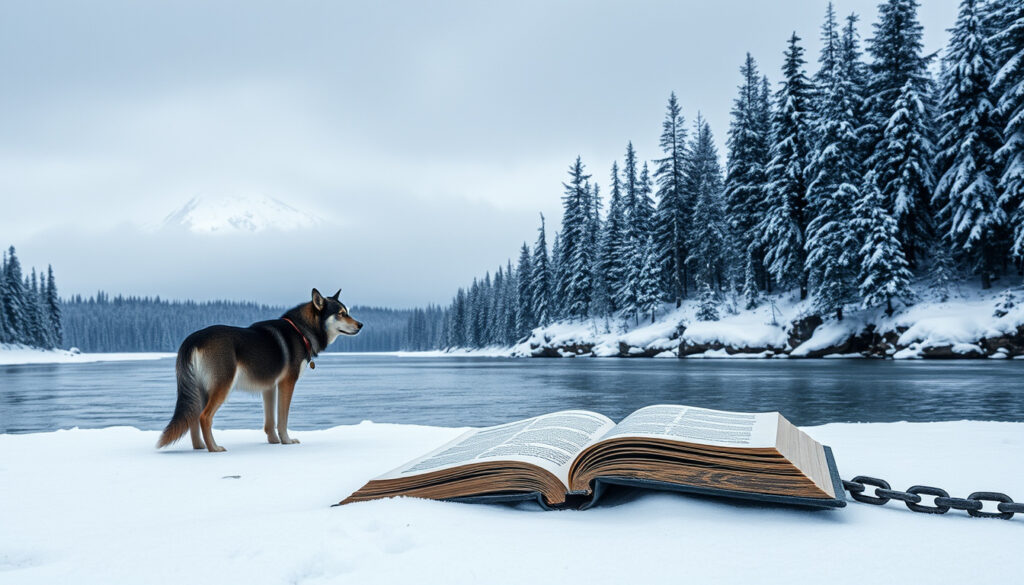
Call of the Wild: Banned Book, True Story & Ending
Few books have managed to both captivate readers and stir up as much controversy as Jack London’s The Call of the Wild. Published in 1903 during the Klondike Gold Rush, the novel follows Buck, a dog stolen from California and thrust into the harsh Yukon wilderness. Today, it’s not just a classic—it’s also one of the most frequently challenged books in American schools, sparking debates over language, violence, and racial stereotypes. This guide explores why it’s been banned, whether it’s based on a true story, what happens at the end, and where to watch the latest film adaptation.
Publication year: 1903 · Author: Jack London · Setting: Yukon, Canada · Banned: Yes (in many US school districts) · Film adaptations: 4 (1923, 1972, 1997, 2020)
Quick snapshot
- Exact reason for ban in every school district (Wikipedia)
- Whether the ending is universally considered happy (USA TODAY)
- Current streaming availability varies by region (Yahoo Entertainment)
- 1903: Novel published (Wikipedia)
- 1972: First major film adaptation (Wikipedia)
- 2020: Disney film starring Harrison Ford (20th Century Studios)
- Various: Banned from school curricula in some US states (Wikipedia)
- Streaming platforms may shift—check Disney+ and Prime Video (Yahoo Entertainment)
- Debates over book bans continue in school districts (Wikipedia)
- Future adaptations possible as public domain works (Wikipedia)
Six key facts about the book, one pattern: the novel’s simple premise belies deep layers of controversy and cultural impact.
| Published | 1903 |
|---|---|
| Author | Jack London |
| Setting | Yukon, Canada |
| Main character | Buck (a dog) |
| Banned | Yes (multiple US school districts) |
| Film adaptations | 4 (1923, 1972, 1997, 2020) |
Why is Call of the Wild banned?
Reasons for the ban
- The novel has been challenged for its use of racial slurs and depictions of violence (Wikipedia literary work page).
- Jack London’s portrayal of Native Americans faced criticism for stereotyping (Wikipedia).
- Some school districts have removed the book from required reading lists over these concerns (Wikipedia).
Historical censorship context
- The book was banned in some US schools as early as the 1980s, often alongside other classics like Huckleberry Finn and Of Mice and Men (Wikipedia).
- Challenges typically cite “offensive language” and “racist content” (Wikipedia).
Controversial language and themes
- The novel uses the N-word and other derogatory terms for Indigenous people (Wikipedia).
- Violence toward animals, including dog fights and harsh treatment, has also sparked debate (Wikipedia).
- Supporters argue the language reflects the historical period and the story’s critique of brutality (Wikipedia).
Keeping the novel in curricula preserves its historical value and literary merit, but exposing students to derogatory language without careful context can cause real harm. Schools must decide which weighs more for their community.
The implication: the debate over banning The Call of the Wild is not about the book alone—it’s part of a larger conversation about what we teach children and how we reckon with uncomfortable aspects of our cultural heritage.
What is the #1 banned book in the world?
Top banned books worldwide
- There is no single global #1 banned book; censorship patterns vary by country. In the United States, the most challenged book in 2022 was Gender Queer by Maia Kobabe, according to the American Library Association (ALA).
- Other frequently banned books globally include political and religious texts such as The Satanic Verses and Mein Kampf (Wikipedia).
How The Call of the Wild compares
- The Call of the Wild appears on many “most challenged classics” lists but is far from the top challenged book overall (Wikipedia).
- Its controversies are region-specific and often tied to individual school district decisions rather than nationwide bans (Wikipedia).
The most challenged books in US schools
- The ALA’s Office for Intellectual Freedom tracks challenges annually. In 2022, Gender Queer was the most challenged, followed by All Boys Aren’t Blue and The Bluest Eye (ALA).
- Classics like The Call of the Wild appear in lists of frequently challenged classics but are not near the top of the annual list (Wikipedia).
The perception that The Call of the Wild is “the #1 banned book” is a myth, but it reflects how a single well-known title can become a symbol for censorship debates, even when the data shows other books face more frequent challenges.
The pattern: the “most banned book” title shifts yearly and by country—what remains constant is that The Call of the Wild serves as a recurring flashpoint in the broader culture war over what children read.
Is The Call of the Wild based on a true story?
Inspiration from real events
- The novel is fiction, but Jack London drew heavily from his own experiences during the Klondike Gold Rush (Wikipedia).
- London spent time in the Yukon in 1897–1898, observing the harsh conditions and the lives of prospectors and sled dogs (Wikipedia Jack London page).
Fictional elements
- The dog Buck is not based on a real animal; he is a composite character created by London (Wikipedia).
- The specific events of the story—the theft, the abuse by owners, the final return to the wild—are inventions (Wikipedia).
Jack London’s own experiences
- London’s time as a gold prospector gave him authentic detail about survival in the wilderness (Wikipedia Jack London page).
- He also drew on stories he heard from other miners and travelers (Wikipedia Jack London page).
The novel’s realism is so convincing that many readers assume it’s a true story—yet every character and event is imagined. London’s skill lies in making fiction feel like reportage.
The catch: while not true, the book works because it feels emotionally and physically real. Readers who want a factual account of the Klondike should turn to London’s non-fiction, like The Cruise of the Snark.
Is Call of the Wild a happy ending?
Summary of the ending
- In the novel, Buck finally answers the call of the wild and leaves human civilization forever, joining a wolf pack in the forest (USA TODAY).
- In the 2020 film, John Thornton dies after being shot, and Buck kills the antagonist Hal before leading a wolf pack with a mate (Wikipedia 2020 film page).
Interpretation of Buck’s fate
- Some readers see a triumphant return to nature—Buck sheds domesticity and reclaims his primitive instincts, a happy ending of freedom (USA TODAY).
- Others view it as a tragic loss of the bond between Buck and John Thornton, leaving a sense of isolation (Decider).
Reader reactions
- Reader reviews on Goodreads and social media show a split: some cry happy tears, others feel heartbroken (Decider).
- USA TODAY reporter Brian Truitt noted that the film’s ending could make viewers cry, calling it “emotionally charged” (USA TODAY).
If you’re coming to the story only through the 2020 film, the ending is decidedly more bittersweet than the novel’s serene departure. Don’t expect a purely cheerful farewell.
The trade-off: calling it “happy” or “sad” depends on what you value—freedom over companionship, or loyalty over instinct. The ending is designed to feel both liberating and mournful.
Is Call of the Wild on Netflix or Prime?
Streaming availability
- As of late 2023, the 2020 film is available on Disney+ with a subscription, and on Prime Video as a rental or purchase (Yahoo Entertainment).
- It is not currently available on Netflix in most regions (Yahoo Entertainment).
- Other platforms like DirecTV and FuboTV also carry the film (Yahoo Entertainment).
How to watch the 2020 film
- Disney+ is the primary streaming home for the 2020 film (Yahoo Entertainment).
- Physical media: Blu-ray and DVD released on May 12, 2020 (Wikipedia 2020 film page).
Alternative adaptations
- The 1972 film starring Charlton Heston is available on some platforms (check Amazon Prime, Apple TV) (Wikipedia 1972 film page).
- The 1923 silent version is in the public domain and can be found on YouTube (Wikipedia 1923 film page).
Streaming rights shift often—if you’re looking specifically for the 2020 adaptation, start with Disney+. For the book, your local library or a free ebook is your best bet.
Why this matters: the availability gap between the classic novel (free and always accessible) and the modern film (locked behind paywalls) mirrors the cultural gap that has made the book a battleground.
Confirmed facts vs. what remains unclear
Confirmed facts
- Publication year 1903 (Wikipedia)
- Author Jack London (Wikipedia Jack London page)
- Setting: Klondike Gold Rush (Wikipedia)
- Multiple film adaptations exist (Wikipedia)
- The novel is fiction, not a true story (Wikipedia)
- 2020 film is available on Disney+ (Yahoo Entertainment)
What remains unclear
- Exact reasoning behind each school district’s ban decision (Wikipedia)
- Whether the ending is universally happy or sad (USA TODAY)
- Current streaming availability for all adaptations in every region (Yahoo Entertainment)
- How future adaptations will handle the controversial content (Wikipedia)
“He was sounding the deeps of his nature, and of the parts of his nature that were deeper than he, going back into the womb of Time.”
— Jack London, The Call of the Wild (Wikipedia)
“The American Library Association’s Office for Intellectual Freedom consistently records challenges to classic works like The Call of the Wild, reflecting ongoing community tensions over language and content in educational settings.”
— American Library Association, via ALA banned classics page
facebook.com, youtube.com, youtube.com, youtube.com, youtube.com, youtube.com, reddit.com, en.wikipedia.org
For readers curious about the controversy, a detailed look at why the novel was banned reveals the historical and cultural reasons behind its removal from school shelves.
Frequently asked questions
What is the main plot of The Call of the Wild?
The novel follows Buck, a large domestic dog stolen from a California estate and sold as a sled dog in the Yukon during the Klondike Gold Rush. Through abuse and harsh conditions, Buck sheds his civilized nature and eventually joins a wolf pack in the wild (Wikipedia).
Who is Buck?
Buck is the main character—a dog, part St. Bernard and part Scotch Shepherd. He is the protagonist through whom the story’s themes of survival, instinct, and the return to nature are explored (Wikipedia).
Why did Jack London write The Call of the Wild?
London wrote the novel after returning from the Klondike Gold Rush, drawing on his experiences and observations. He was influenced by Darwinian ideas and wanted to explore the conflict between civilization and primal instinct (Wikipedia).
Is The Call of the Wild a children’s book?
Despite featuring a dog as the main character, the novel contains violence, cruelty, and racial slurs, leading many educators to consider it more appropriate for high school students with proper context (Wikipedia).
What are the differences between the book and the 2020 film?
The 2020 film softens the violence, changes the ending (Thornton dies from a gunshot and Buck kills Hal), and adds a more explicit family-friendly tone. The novel is grittier and ends with Buck simply leaving civilization (USA TODAY).
How long is the book?
The novel is approximately 200–230 pages depending on the edition, with a total word count of about 32,000 words (Wikipedia).
What other books did Jack London write?
London wrote numerous novels and stories, including White Fang (1906), The Sea-Wolf (1904), Martin Eden (1909), and the short story “To Build a Fire” (Wikipedia Jack London page).
Related reading: That Thing You Do! True Story, Cast, Song & Stream Guide · I Can Only Imagine: True Story, Father Abuse, and Where to Watch
More related posts
 Mashable Connections Hints Today: Clues & Answers for Puzzle
 How Old Is Mike Tyson? Age, Career & Net Worth
 Kim Yo Jong: North Korea’s Powerful Propaganda Chief & Diplomat
 The Devil Wears Prada: True Story, Cast, Quotes & Sequel
 Where Was Jesus Born? Bethlehem in Judea Bible Facts
 49ers vs Colts Match Player Stats – Week 16 Box Score Breakdown
 Best Provoleta Near Me: Cooking Guide & Nutrition Facts
 SSI Payments May 2025: Dates, Amounts & Double Check