When Does Winter Start 2025? Two Official Dates
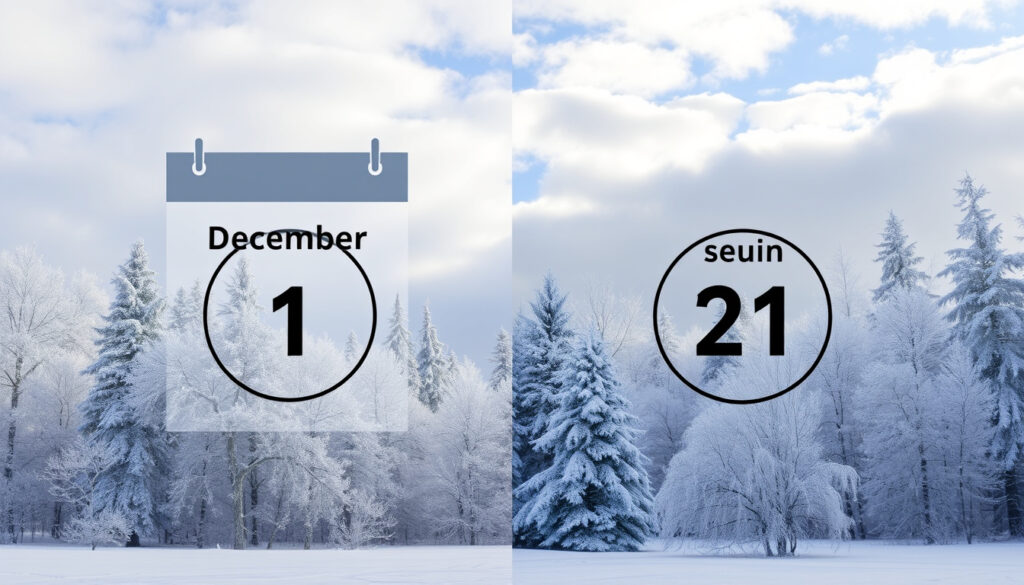
Winter 2025 has two official start dates, not one. The astronomical winter solstice on December 21 marks the shortest day, while meteorological winter kicks off on December 1 — a fixed date weather forecasters rely on for consistency.
Winter solstice 2025 (Northern Hemisphere): December 21, 2025 at 15:03 UTC · Meteorological winter start (Northern Hemisphere): December 1, 2025 · Astronomical winter start (Southern Hemisphere): June 21, 2025 · Shortest day length at 40° N: Approximately 9 hours 20 minutes · Winter solstice 2026 (Northern Hemisphere): December 21, 2026
Quick snapshot
- Astronomical winter begins at the winter solstice on Dec 21, 2025 at 15:03 UTC (NOAA NESDIS satellite agency)
- Meteorological winter starts Dec 1, 2025 in the Northern Hemisphere (NOAA National Weather Service)
- Whether 2026 will be the hottest year is uncertain; near-record temperatures are projected but vary by model.
- Dec 1, 2025: Meteorological winter begins in the Northern Hemisphere
- Dec 21, 2025 at 15:03 UTC: Winter solstice – astronomical winter begins
- Spring equinox on Mar 20, 2026 ends astronomical winter; Feb 28, 2026 ends meteorological winter.
The two systems use entirely different calendars, yet both aim to capture the same cold season.
| Fact | Value |
|---|---|
| Winter solstice 2025 (Northern Hemisphere) | December 21, 2025 at 15:03 UTC |
| Meteorological winter start (Northern Hemisphere) | December 1, 2025 |
| Winter solstice 2026 (Northern Hemisphere) | December 21, 2026 |
| Shortest day length (40° N) | About 9 hours 20 minutes |
| Winter months (Northern Hemisphere) | December, January, February |
| Winter months (Southern Hemisphere) | June, July, August |
The implication: Whether you plan around the solstice or the calendar, the core winter period stays consistent — the difference is the starting line.
When does winter start in 2025?
Astronomical winter start date and time
- Astronomical winter in the Northern Hemisphere begins at the winter solstice: December 21, 2025 at 15:03 UTC (NOAA NESDIS satellite agency).
- The solstice is the moment the Sun reaches its southernmost point over the Tropic of Capricorn (NOAA National Weather Service).
- This date can vary between Dec 20–23; in 2025 it falls on Dec 21 (ABC7 News).
Meteorological winter start date
- Meteorological winter starts on a fixed calendar date: December 1, 2025 (NOAA National Weather Service).
- This system groups seasons into three-month blocks: winter is December, January, February (Royal Meteorological Society).
- The Southern Hemisphere winter starts on June 21, 2025 astronomically (NOAA National Weather Service), and June 1 meteorologically.
For anyone marking a calendar, December 1 is the simpler, more consistent start. But if you want the true astronomical moment — the shortest day — mark December 21 at 15:03 UTC.
What this means: Two different systems, both valid. The choice affects how you plan travel, heating budgets, and seasonal events.
Is December 21st the first day of winter?
Astronomical definition of winter
- December 21 is the first day of astronomical winter in the Northern Hemisphere (Farmers’ Almanac).
- The winter solstice marks the shortest day and longest night of the year (NOAA National Weather Service).
Meteorological definition of winter
- Meteorological winter starts on December 1, not December 21 (NOAA National Weather Service).
- This calendar-based system makes seasonal comparisons easier year-to-year (Royal Meteorological Society).
The trade-off: December 21 is the astronomical truth, but December 1 is the practical tool used by weather services across the globe.
What is technically the first day of winter?
Astronomical winter solstice explanation
- Technically, the first day of winter depends on the definition you follow — astronomical or meteorological (Royal Meteorological Society).
- Astronomical winter begins at the winter solstice, typically December 21 or 22 in the Northern Hemisphere (NOAA NESDIS satellite agency).
Meteorological season definition
- Meteorological winter is defined by the coldest three months: December, January, February (Royal Meteorological Society).
- This system is used by organisations like the Met Office and National Weather Service for consistent climate data.
If you’re reading a winter weather forecast, the meteorological start is the one that aligns with when the coldest air typically arrives. Astronomical winter can feel late if you live in a region where snow already flies in November.
The pattern: There is no single “technically correct” answer — both are official, just built for different purposes.
Which month is winter in 2025?
Winter months in the Northern Hemisphere
- Meteorological winter months in the Northern Hemisphere are December 2025, January 2026, and February 2026 (NOAA National Weather Service).
- Astronomical winter covers from December 21, 2025 to March 20, 2026.
Winter months in the Southern Hemisphere
- In the Southern Hemisphere, winter months are June, July, and August 2025 (NOAA National Weather Service).
- Astronomical winter there starts on June 21, 2025.
The catch: When it’s winter in the Northern Hemisphere, it’s summer in the Southern Hemisphere — a simple orbital flip that many forget when planning global travel.
What months are winter in Ireland?
Meteorological winter in Ireland
- In Ireland, meteorological winter runs from December 1 to February 28/29, as used by Met Éireann for climate statistics.
- This aligns with the European standard of grouping seasons by calendar months.
Astronomical winter in Ireland
- Astronomical winter in Ireland begins on the winter solstice, around December 21 (Royal Meteorological Society).
- Met Éireann prefers the meteorological definition for consistency in long-term climate data.
Ireland’s coolest and wettest season typically spans the meteorological winter months, but the astronomical solstice still marks the symbolic shortest day — creating a dual system that can confuse anyone planning outdoor events.
What this means: For residents and visitors, the practical winter in Ireland runs from December through February, regardless of the solstice date.
Timeline: Winter 2025–2026
- December 1, 2025 – Meteorological winter begins in the Northern Hemisphere (NOAA National Weather Service)
- December 21, 2025 at 15:03 UTC – Winter solstice – astronomical winter begins (NOAA NESDIS satellite agency)
- December 21, 2025 – Shortest day of the year in the Northern Hemisphere (NOAA National Weather Service)
- February 28, 2026 – Meteorological winter ends in the Northern Hemisphere
- March 20, 2026 – Spring equinox – astronomical winter ends
- December 21, 2026 – Winter solstice 2026 in the Northern Hemisphere
The pattern: The solstice anchors the astronomical calendar, while the fixed start of December 1 makes meteorological winter predictable for planners.
Confirmed facts and what’s still unclear
- Confirmed: Winter solstice 2025 occurs on December 21 at 15:03 UTC (NOAA NESDIS satellite agency, Royal Meteorological Society, Farmers’ Almanac).
- Confirmed: Meteorological winter starts December 1 in the Northern Hemisphere (NOAA National Weather Service, Royal Meteorological Society).
- Confirmed: In Ireland, meteorological winter runs December to February.
- Unclear: Whether 2026 will be the hottest year is uncertain; near-record temperatures are projected but vary across models.
The implication: The broad facts are settled. The only real open question is a climate projection — not a winter-start date dispute.
Expert perspectives on winter 2025
The official start of astronomical winter in 2025 will occur on Sunday, Dec. 21, 2025, at 10:03 a.m. EST, which corresponds to 15:03 UTC.
— NOAA NESDIS (U.S. satellite and environmental agency)
Meteorological winter is a fixed calendar convention that makes seasonal climate statistics easier to compare year to year.
— Royal Meteorological Society (UK professional weather body)
The winter solstice is the shortest day and longest night of the year in the Northern Hemisphere.
— NOAA National Weather Service
Astronomical seasons can shift by a day or two from year to year because of leap years and the fact that Earth’s orbit is elliptical rather than perfectly circular.
— Royal Meteorological Society
Winter 2025 arrives with a clear dual answer. For anyone looking at a weather forecast, the start is December 1. For anyone tracking the Sun’s position, it’s December 21 at 15:03 UTC. For Irish residents and those in similar latitudes, the practical winter spans December through February. The choice between astronomical and meteorological definitions isn’t a matter of correctness — it’s a matter of convenience. A family in Dublin planning heating costs will focus on December 1. A photographer chasing the shortest day’s light will mark the solstice.
For those in the UK wondering about the two official definitions, our guide to UK winter start dates offers the same breakdown for the British calendar.
Frequently asked questions
What is the winter solstice?
The winter solstice is the moment when the Sun reaches its southernmost point in the sky, directly over the Tropic of Capricorn. It marks the shortest day and longest night of the year in the Northern Hemisphere (NOAA National Weather Service).
Why does winter start on two different dates?
Because there are two systems: astronomical winter, based on Earth’s tilt and orbit, starts at the solstice; meteorological winter, based on the calendar and annual temperature cycles, starts on December 1 (Royal Meteorological Society).
How long does winter last?
Astronomical winter lasts from the winter solstice to the spring equinox — about 89 days. Meteorological winter lasts the full three months of December, January, and February.
Does winter start on the same day every year?
Astronomical winter can start on December 20, 21, 22, or 23 depending on leap years and orbital variations (Royal Meteorological Society). Meteorological winter always starts on December 1.
What is the difference between astronomical and meteorological seasons?
Astronomical seasons are defined by solstices and equinoxes; meteorological seasons are defined by the Gregorian calendar into three-month blocks based on annual temperature cycles (Royal Meteorological Society).
When is the shortest day of the year in 2025?
December 21, 2025 — the winter solstice — will have the fewest daylight hours in the Northern Hemisphere (NOAA National Weather Service).
When does winter end in 2025?
Meteorological winter ends on February 28, 2026. Astronomical winter ends on the spring equinox, March 20, 2026.
More related posts
 20 C to F: Convert 20°C to Fahrenheit, Feel, and Common Questions
 How to Make Grilled Cheese – Crispy Recipe in 10 Minutes
 PDF Editor Online Free – Top Tools Compared 2025
 2014 Jeep Grand Cherokee: Problems, Price & Reliability
 Search Obituaries by Last Name: Free Step-by-Step Guide 2025
 Sleep With One Eye Open: Metallica Lyric Meaning Explained
 US Teacher Appreciation Day 2025 – Date, History and Celebration Ideas
 What Is Florida’s Minimum Wage in 2025? $14.00/hr