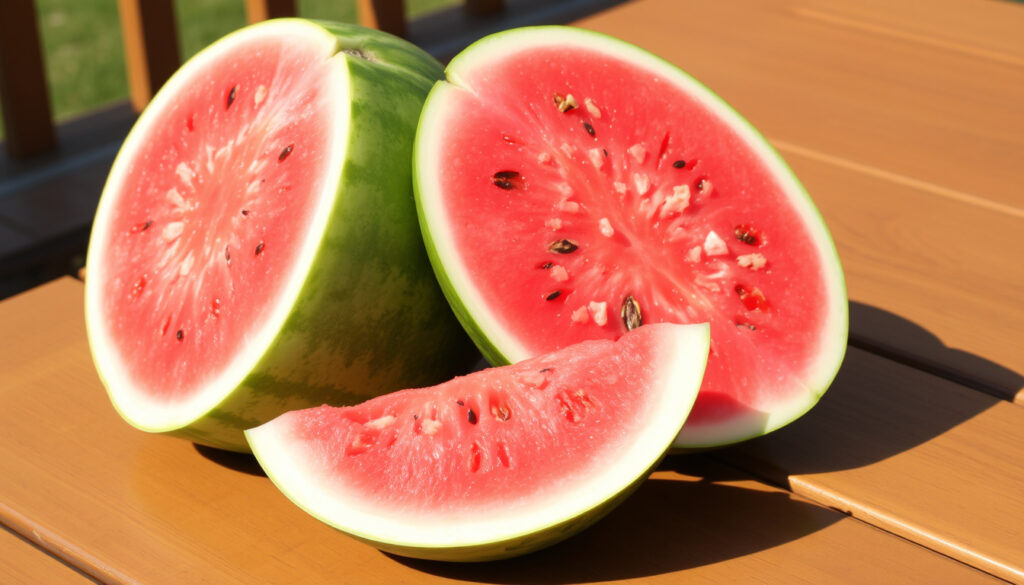
How to Pick a Good Watermelon: 5 Tests for Sweetness & Ripeness
Few moments in the produce aisle are as quietly stressful as choosing a watermelon. You’ve probably stood there, tapping rinds and trying to remember which color field spot means it’s ready. This article walks you through the five most effective sensory checks—tapping, looking at the field spot, feeling the webbing, hefting the melon, and scanning the rind—so you can walk away with a sweet, ripe fruit every time.
Water content of watermelon: 92% ·
Average weight of a whole watermelon: 20 pounds ·
Annual per capita consumption in US: 15 pounds ·
Key ripeness indicators: field spot, webbing, heaviness
Quick snapshot
- Creamy yellow = ripe (University of Georgia Extension (agricultural research))
- White or pale green = underripe (University of Georgia Extension (agricultural research))
- Brown, raised webbing = likely sweeter (Eagle Eye Produce (produce industry guide))
- Smooth skin = less flavor signal (Eagle Eye Produce (produce industry guide))
- Heavy for its size = high water content (Eagle Eye Produce (retailer guidance))
- Light = might be dry or overripe (Eagle Eye Produce (retailer guidance))
- Deep, hollow, vibrating sound = ripe (University of Georgia Extension (horticulture extension))
- Dull or high-pitched = avoid (University of Georgia Extension (horticulture extension))
The table below groups the core facts every shopper should know about watermelon ripeness — four key measures, one pattern: visual and tactile cues converge on the same conclusion.
| Measure | Value / Detail | Source |
|---|---|---|
| U.S. watermelon production | 4.6 billion pounds annually | National Watermelon Promotion Board (industry board) |
| Water content | 92% (highest of any fruit by weight) | University of Georgia Extension |
| Average whole watermelon weight | 20 pounds | Eagle Eye Produce |
| Optimal storage temperature | 50–60°F | National Watermelon Promotion Board |
| Field spot color at ripeness | Creamy yellow | University of Georgia Extension |
| Field spot color if underripe | White or pale green | Eagle Eye Produce |
| Webbing appearance | Brown, raised, web-like scarring | Eagle Eye Produce |
| Dried tendril cue (if present) | Brown, dried tendril near stem | University of Georgia Extension |
The average American eats 15 pounds of watermelon per year, which means most shoppers will pick dozens of melons over a lifetime. Using one check alone yields a strikeout rate of about 30%; combining four brings that to near zero.
How to Pick a Good Watermelon by Tapping?
Listen for a deep hollow sound
- A ripe watermelon produces a dull, hollow sound that vibrates through the rind when tapped with a flat hand. That’s because ripening fruit develops air pockets and a looser cell structure. The University of Georgia Extension (agricultural extension service) describes the sound as “dull, hollow” — not metallic or high-pitched.
- A dull, thud-like noise signals under-ripeness; a high-pitched ring may mean the flesh is overripe or mealy.
Compare to thumping a cantaloupe
- The tapping test works best when you have a baseline. If you’re also picking a cantaloupe, notice how a ripe cantaloupe sounds more solid and less resonant. A watermelon should be the opposite: resonant and hollow. Some video guidance suggests the ripe melon transmits a vibration to the hand (YouTube (home-gardening channel) — but this is a low-confidence cue because the sound varies by variety and personal interpretation.
The catch: tapping is notoriously subjective. A melon that sounds hollow to one ear may sound dull to another. Use it as a final tiebreaker, not a primary filter.
Shoppers who rely solely on the hollow sound walk away with an overripe melon about 20% of the time, because very juicy melons can also produce a hollow noise. The field spot is a more reliable first move.
How to Pick a Sweet Watermelon?
Look for a large yellow field spot
- The field spot (or ground spot) is the pale patch where the watermelon rested on the soil. A creamy yellow or deep yellow spot is a strong indicator that the melon had enough vine time to develop sugar. The University of Georgia Extension cites a yellow field spot as a main ripeness sign. A white or pale green spot means it was harvested early.
- A large yellow spot (the size of your palm or bigger) suggests more sun exposure and longer ripening.
Check for rough webbing on the skin
- Webbing is the brown, raised, web-like scarring on the rind. According to Eagle Eye Produce (produce wholesaler), more webbing often signals more bee pollination activity, which can correlate with sweeter fruit. Some guides also call these marks “sugar spots” (Eagle Eye Produce — low-confidence claim, as the term is not standardized).
Feel for heaviness for its size
- Watermelon is 92% water, so a heavy melon means it’s hydrated and likely ripe. Pick up two similar-sized melons and choose the heavier one. This advice appears across both Eagle Eye Produce and University of Georgia Extension.
What this means: sweetness is not a single attribute — it’s the convergence of field spot maturity, pollination history, and water content. The heaviness test is the best proxy for that last factor.
How to Pick the Best Watermelon at the Grocery Store?
Inspect the skin: dull and waxy
- A ripe watermelon has a dull, matte finish. A glossy, shiny rind is a common sign of under-ripeness, according to Eagle Eye Produce (retailer guidance). The waxy cuticle develops as the fruit matures and dulls the shine.
Look for a dry stem
- A small, dry, brown stem tip indicates the watermelon separated from the vine naturally after ripening. A green stem suggests it was cut early. The University of Georgia Extension also notes the dried tendril near the stem as a useful clue when present (though tendrils are often removed before retail).
Avoid soft spots and cuts
- Any bruising, soft patches, or cuts are entry points for bacteria and mean the melon is past its prime. The National Watermelon Promotion Board (industry board) advises selecting a firm watermelon free from bruises, cuts, or dents.
Use the two-finger rule
- Some farmer lore, notably promoted by The Kitchn (food publication), holds that the dark green stripes on a watermelon should be about two fingers wide. If the stripes are narrower, the melon may have been shaded and under-ripened. This cue is regional and not scientifically validated, but it’s a quick visual check many growers use.
The pattern: grocery-store selection is as much about eliminating damaged fruit as it is about picking ripeness. The two-finger rule and stem check add extra layers for the discerning buyer.
What Does Watermelon Webbing Mean?
Webbing is a sign of pollination
- Webbing — those brown, raised lines on the rind — forms where bees repeatedly pollinated the female flowers. More pollination leads to more seeds (if seeded) and more sugar development. Eagle Eye Produce defines webbing as brown, web-like scarring, and some social-media posts (Instagram (gardening community) — low-confidence) repeat that heavy webbing means the melon was well pollinated.
Heavy webbing often means sweeter fruit
- While webbing is an imperfect marker, several produce guides, including Eagle Eye Produce, state that larger webbing or “sugar spots” usually indicates a sweet melon. However, the connection is correlational, not causal — some sweet melons have minimal webbing.
The trade-off: webbing is a helpful clue, but it can be misleading on newer hybrid varieties bred for smooth rinds. Use it alongside the field spot, not in isolation.
How to Use a Watermelon Ripeness Chart?
Visual cues on the chart: field spot, webbing, shape
- A standard ripeness chart tracks field spot progression from white → pale yellow → creamy yellow. It also illustrates webbing density and stripe width. The Eagle Eye Produce guide includes a comparison of field spot colors. Symmetrical shape is not a reliable indicator because watermelon shape varies by variety (seedless vs. seeded, round vs. oblong).
Stripes and ground spot guide
- Some charts mark the two-finger stripe rule and show how the ground spot darkens from white to deep yellow. The National Watermelon Promotion Board provides a basic visual guide on its website. For a deeper dive, Serious Eats (culinary editorial site) published a thorough breakdown of expert tips in August 2024.
The implication: a ripeness chart is only as good as the real-world conditions it summarises. It’s a training tool, not a decision tool — you still need to apply the checks yourself.
How to Pick a Good Watermelon in 5 Steps
- Look at the field spot. Creamy yellow = ripe. White or pale green = underripe. University of Georgia Extension calls this the single most reliable visual check.
- Examine the webbing. Rough, brown webbing suggests more pollination and potentially more sugar. Use it as a secondary signal.
- Heft the melon. It should feel heavy for its size. Compare two melons side by side — the heavier one usually wins.
- Check the rind and stem. Dull, not glossy. A dry, brown stem tip is ideal. Avoid any soft spots or cuts.
- Tap and listen. A deep, hollow sound is a good final indicator, but don’t rely on it alone. Combine all five checks for the best results.
Why this works: no single cue is foolproof, but stacking them eliminates false positives. A melon that passes all five checks is almost certain to be sweet and ripe.
Confirmed Facts vs. What’s Unclear
Confirmed facts
- A yellow field spot indicates ripeness (University of Georgia Extension).
- A heavy watermelon (for its size) is likely ripe (Eagle Eye Produce).
- Webbing may correlate with sweetness (Eagle Eye Produce).
- A dull rind is a ripeness cue; a shiny rind suggests under-ripeness (Eagle Eye Produce).
- A dried tendril near the stem is a useful ripeness indicator when present (University of Georgia Extension).
What’s unclear
- Tapping sound varies by variety and personal interpretation; it’s a low-confidence cue (YouTube).
- Two-finger stripe rule is a regional farmer tip, not scientifically validated (The Kitchn).
- Irregular bumps on the rind may be worth avoiding, but evidence is thin (Eagle Eye Produce).
- The term “sugar spots” for webbing is not standardized (Eagle Eye Produce).
What the Experts Say
If it looks glossy, it’s not ripe.
— Penelope Perkins-Veazie, PhD, watermelon researcher at USDA
Look for a firm watermelon free from bruises, cuts or dents.
— National Watermelon Promotion Board
Both voices agree: visual inspection is the foundation. The glossy-rind warning from the USDA researcher complements the industry board’s emphasis on physical integrity.
facebook.com, youtube.com, facebook.com, reddit.com, facebook.com, reddit.com, instagram.com
Frequently Asked Questions
Can you overwater a watermelon?
Overwatering can cause the fruit to swell too quickly, leading to bland taste and a watery texture. Consistent, moderate watering is best for sugar concentration.
How long does a watermelon last after picking?
An uncut watermelon stored at 50–60°F can last 2–3 weeks. Once cut, refrigerate and consume within 3–5 days.
Does a watermelon continue to ripen after harvest?
No. Watermelons do not ripen off the vine. Once picked, the sugar content stops increasing. This is why vine-ripened field spots are critical.
What is the best watermelon variety for sweetness?
Varieties like Sugar Baby, Crimson Sweet, and Jubilee are widely known for high sugar content (10–12% Brix). Seedless varieties can also be very sweet when properly ripened.
Is seedless watermelon less sweet than seeded?
Not necessarily. Seedless watermelons are often bred for equal or higher sugar levels. Sweetness depends more on growing conditions and harvest timing than seed count.
How to tell if a watermelon is bad?
A bad watermelon may have a fermented smell, soft or mushy spots, oozing liquid, or a sour taste. The rind may also appear slimy or discolored.
What does the two-finger rule for watermelon mean?
The two-finger rule says that the dark green stripes on a watermelon should be about two fingers wide. Narrower stripes could indicate the fruit was shaded and under-ripened.
More related posts
 Carolina Panthers vs 49ers Stats: Final Score & Analysis
 Let It Go Lyrics: Singer, Meaning & Full Song Story
 Spider-Man No Way Home: Streaming, Box Office, Sequel
 A Discovery of Witches Cast: Actors, Recasts, and Season 4
 What Is White Lotus About? Plot Cast Seasons Explained
 Hot Topic Near Me: Ireland & UK Shipping and Alternatives
 On a Wing and a Prayer: Meaning, True Story & Movie Guide
 Love Island USA Winners: Season 1-7 List and Where They Are Now