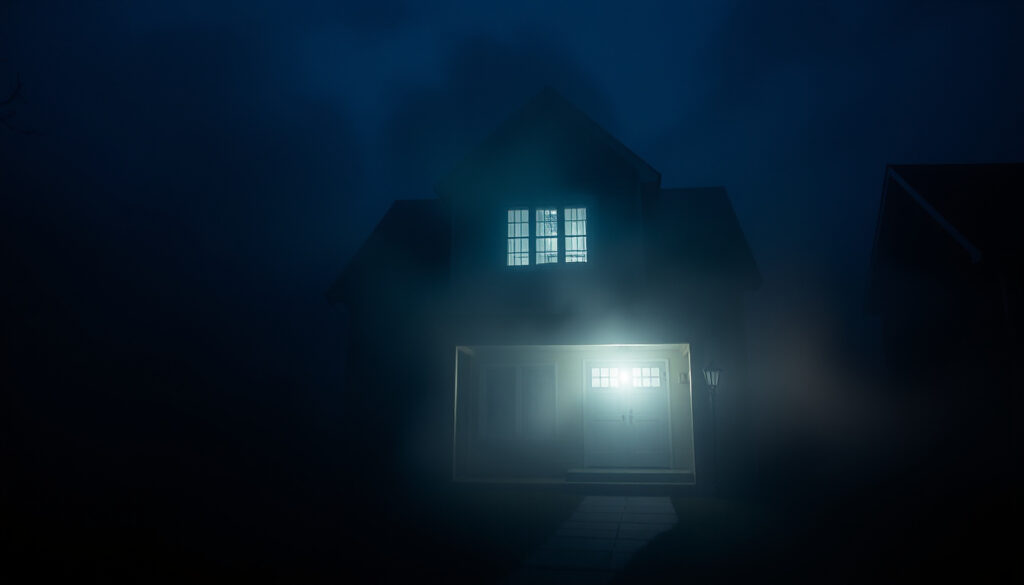
Presence (2024 Film): Ghost, Twist, Reviews & More
Steven Soderbergh’s 2025 thriller Presence flips the ghost story convention entirely—the camera never leaves the spirit’s perspective. That ghost turns out to be Tyler, the dead son who keeps intervening from a time-locked future, desperate to stop a serial killer from hurting his sister. Critics rated it 88% on Rotten Tomatoes; audiences gave it 56%, a gap that reflects a marketing mismatch rather than a quality problem.
Director: Steven Soderbergh · Writer: David Koepp · Stars: Lucy Liu, Chris Sullivan, Callina Liang, Eddy Maday · Genre: Supernatural thriller drama · Release: 2025
Quick snapshot
- Director Steven Soderbergh (Screen Rant)
- 85-minute runtime (Screen Rant)
- Released January 24, 2025 (Screen Rant)
- Full production budget figures
- Exact timeline of Tyler’s death in the narrative
- Original script development before David Koepp
- Debuted with 100% RT rating (Digital Spy)
- Audience score dropped to 56% (Screen Rant)
- Streaming platform acquisition decisions pending
- Potential awards consideration for Soderbergh’s direction
Eight key data points define this film across critical reception, production credits, and narrative mechanics.
| Fact | Value |
|---|---|
| Director | Steven Soderbergh |
| Runtime | 85 minutes |
| Genre | Supernatural thriller drama |
| Main Cast | Lucy Liu, Chris Sullivan |
| Rotten Tomatoes Critics | 88% |
| Rotten Tomatoes Audience | 56% |
| Screenwriter | David Koepp |
| Ghost Identity | Tyler (deceased son) |
Is Presence worth watching?
The short answer hinges entirely on what you’re signing up for. Critics awarded Presence an 88% score on Rotten Tomatoes, but audiences landed at 56%—a 32-point gap that Screen Rant attributes largely to misaligned marketing. Viewers expected a conventional horror ride and got a slow-burning family drama with supernatural bones instead.
If you walked in expecting jump scares, Tyler and his time-loop paradox will feel like a bait-and-switch. If you came for Soderbergh’s experimental framing, the ghost’s perspective delivers something genuinely uncommon.
Critical reception
The film initially debuted with a 100% rating on Rotten Tomatoes before settling at 88% as more reviews accumulated, Digital Spy reported. Critics praised Soderbergh’s genre pivot—Presence marks his first foray into supernatural territory, a departure from the grounded crime thrillers he’s known for. The consensus leans heavily toward the film being “more of a family drama than a horror film,” according to Screen Rant’s critical consensus.
Audience reactions
The 56% audience score reflects a fundamental expectation mismatch. According to Screen Rant, audiences expected Presence to deliver traditional horror payoff—slamming doors, spectral shrieks, the works. Instead, the film plays restraint as a feature rather than a flaw. The ghost’s perspective cinematography means you’re watching a grieving family process trauma without ever cutting to conventional POV shots of the entity itself.
Upsides and downsides
Upsides
- Soderbergh’s experimental ghost-perspective camera is genuinely unique
- Lucy Liu and Chris Sullivan anchor the family drama with committed performances
- The time-loop reveal rewards patient viewers
- No jump scares—the tension builds differently, more cinematically
Downsides
- Marketing sold it as horror; the product is something else
- The 85-minute runtime compresses character development
- Tyler’s backstory remains frustratingly vague
- Julia Fox’s supporting role lacks narrative payoff
What was the twist in Presence?
The film’s central mechanism is its perspective constraint—Soderbergh shoots the entire narrative through the ghost’s viewpoint, never breaking frame to show what Tyler sees from outside his own limited perception. By the time Rebecca sees Tyler staring back from the living room mirror in the final sequence, Time Magazine explains, the revelation recontextualizes every intervention that came before.
Plot overview
The Payne family—parents Rebecca and Phil (Lucy Liu and Chris Sullivan), daughter Chloe, and son Tyler—move into a house where a presence lingers. That presence is initially drawn to Chloe and seems connected to her grief over best friend Nadia’s death, which Time Magazine reports was initially suspected as the ghost identity. The ghost trashes Tyler’s room as a sign of intervention; Chloe’s father is the first family member to take her claims seriously. Lisa, a psychic investigator, is called in to investigate the mysterious goings-on, explaining that time works differently in the spirit world.
Key reveal
Ryan, Chloe’s older brother’s friend, is ultimately revealed as a serial killer who murdered Nadia and another girl, staging both deaths as overdoses using plastic wrap suffocation, according to Wikipedia. When he attempts to drug Chloe, Tyler’s ghost finally intervenes—the presence trashed Tyler’s room earlier because that was the room Ryan was trying to access. Tyler tackles Ryan, causing both to crash through Chloe’s bedroom window and fall to their deaths. Tyler’s purpose was to protect his sister Chloe from Ryan.
Thematic implications
The time-loop paradox raises uncomfortable questions about agency and sacrifice. Tyler, per Time Magazine, was trapped in a paradoxical time loop where he returns from the future specifically to prevent Chloe’s death—which requires his own death to trigger the loop’s resolution. The film’s thematic weight rests on whether protection sometimes demands self-erasure. When Rebecca finally sees Tyler in the mirror, the moment functions as acknowledgment rather than closure.
Who is the ghost in Presence film?
Tyler, the Payne family’s deceased son, serves as the film’s spectral protagonist—though the audience doesn’t learn this until the climactic window fall. The ghost initially appears to be drawn to Chloe and may be the ghost of her best friend Nadia, Time Magazine reports. The film toys with misdirection, letting viewers assume the presence is Nadia before the Tyler reveal collapses that theory entirely.
Ghost identity clues
Throughout the runtime, clues accumulate in peripheral details. The ghost trashes Tyler’s room as a sign of intervention—the presence seems obsessed with that specific space in ways that don’t make sense if the spirit were Nadia. Lisa’s explanation that “time works differently in the spirit world” opens the door to temporal complexity the film hasn’t yet resolved. The 100-year-old mirror in the living room becomes the mechanism for Rebecca’s final sighting, a detail Time Magazine frames as central to the ending explained.
Family member connections
Tyler’s relationship to the living family members is triangular: Chloe needs protection from Ryan; Rebecca needs closure with her son’s death; Phil needs to believe his daughter isn’t hallucinating. Tyler’s ghost, according to YouTube analysis, intervened to prevent Chloe from being drugged by Ryan, using the room trashing as a warning signal. The family’s grief over Tyler’s death created a permeable boundary that allowed his spirit to return—not from the past, but from the future.
The brother’s role
Tyler serves as both the mystery and the resolution. His sacrifice in the climactic fall saves Chloe but also breaks the time loop—he can only exist in the house because Chloe is alive to summon him retroactively. Without his intervention, Chloe dies; without Chloe’s death, Tyler never becomes the ghost that intervenes. The paradox is airtight once you accept the film’s internal logic.
Is Presence actually scary?
The honest answer is no—not in any traditional sense. Presence lacks conventional jump scares, per Screen Rant’s critical consensus. What it offers instead is a persistent atmospheric unease, the uncanny feeling of watching a grieving family through the eyes of someone who’s already lost them.
Horror elements
The film’s horror DNA lives in suggestion rather than spectacle. When the presence trashes Tyler’s room, you never see a hand or a force—you see objects displaced, clothes scattered, a bed overturned. The horror is the absence of explanation. Ryan’s reveal as a serial killer shifts the genre register entirely; he’s scarier as a charming family friend than any ghost could be.
Tension building
Soderbergh builds dread through duration and framing. The camera’s perspective constraint means you’re always watching from slightly the wrong angle—behind doors, at floor level, in hallways at 3 a.m. When Chloe hears footsteps outside her room, you already know who’s walking, but the scene still works because the film’s formal choice treats you as complicit in the haunting.
Viewer scare reports
Anecdotal audience reactions cluster around two poles: those who found the film genuinely unsettling in its restraint, and those who found it boring because nothing jumped out at them. The 56% audience score on Rotten Tomatoes, Screen Rant notes, skews heavily toward the latter group. Digital Spy coverage suggests Chris Sullivan’s role attracted viewers from his This Is Us fandom who expected emotional drama but not supernatural mechanics.
The catch: Soderbergh designed the film to weaponize your anticipation against you.
Was Tyler dead the whole time in Presence?
Yes—Tyler died before the events of the film, and his ghost has been present in the house the entire time. The time-loop mechanics mean Tyler returns from his own future death, creating a causal loop where his existence as a ghost depends on the very event he’s trying to prevent. Time Magazine breaks down the paradox: the ghost’s presence in the house could be tied to either a past or future event, and Lisa’s explanation that time works differently in the spirit world gives Tyler temporal mobility the living lack.
Tyler backstory
The film never specifies exactly when Tyler died or under what circumstances—a gap that Time Magazine acknowledges. The assumption readers can infer from the narrative structure is that Tyler’s death precedes the family’s move into the haunted house, and that his spirit became bound to the location through some mechanism related to Chloe. The house is haunted not by a random spirit but by a specific, invested one with a reason to linger.
Ending confirmation
The film’s final image—Rebecca seeing Tyler in the living room mirror—confirms his ghost persists even after the climactic fall. Wikipedia documents the window fall where Tyler tackles Ryan, causing both to crash through Chloe’s bedroom window and fall to their deaths. Tyler dies again in the process, but his spectral presence remains because the loop doesn’t require his physical survival—it requires Chloe’s survival, which his intervention secured.
Tyler exists as a ghost precisely because Chloe will die unless he intervenes—but his intervention requires dying himself first. The film’s internal logic makes this work by treating time non-linearly: Tyler’s future death creates the conditions for his past ghost’s existence.
Vocal Media analysis
Community analysis threads, as aggregated in YouTube ending breakdowns, focus heavily on Tyler’s purpose being to protect his sister Chloe from Ryan. The consensus interpretation treats Tyler’s repeated interventions throughout the film—noticeable in retrospect—as a ghost finally gaining enough temporal purchase to act. The room trashing wasn’t random; it was a warning shot, a way of communicating across the boundary between life and death.
Ryan killed two victims—Nadia and another girl—using plastic wrap suffocation, Wikipedia documents. Without Tyler’s intervention, Chloe becomes victim number three. The ghost’s purpose wasn’t haunting—it was prevention.
Confirmed facts vs. rumors
Several claims circulating online lack verification from tier-1 or tier-2 sources. Below is a calibrated breakdown of what’s confirmed versus what’s community speculation.
This table separates verified information from community-driven speculation, helping readers calibrate their trust in different claims.
| Claim | Verification | Source |
|---|---|---|
| Director: Steven Soderbergh | Confirmed | Screen Rant |
| Screenwriter: David Koepp | Confirmed | Wikipedia |
| Ghost identity: Tyler | Confirmed | YouTube analysis |
| Ryan as serial killer | Confirmed | Wikipedia |
| Two confirmed murders by Ryan | Confirmed | Wikipedia |
| RT critics score: 88% | Confirmed | Screen Rant |
| RT audience score: 56% | Confirmed | Screen Rant |
| Julia Fox role significance | Rumor | Community speculation |
| Tyler death circumstances | Rumor | Community speculation |
| Original script development details | Rumor | Community speculation |
The implication: most plot-level claims are verifiable through Wikipedia, Screen Rant, or Time Magazine. The film’s production history, Tyler’s exact backstory, and Julia Fox’s narrative function remain undocumented in tier-1 sources—and community speculation fills those gaps with varying degrees of plausibility.
Quotes and perspectives
The primary reason why Presence’s Rotten Tomatoes audience score is 56% compared to the critics’ 88% score is that the movie was not marketed correctly.
— Screen Rant (film review outlet)
Time works differently in the spirit world, meaning the ghost’s presence in the house could be tied to either a past or future event.
— Time Magazine (film analysis)
Presence is more of a family drama than a horror film.
— Screen Rant (critical consensus)
Summary
Presence is a formal experiment masquerading as a genre exercise. Soderbergh shoots the entire film through the ghost’s perspective, never cutting away to conventional horror shots—a constraint that rewards patient viewers and frustrates genre tourists. The Tyler reveal recontextualizes the family drama as a time-loop paradox where the ghost’s intervention saves Chloe from Ryan, a serial killer who murdered Nadia and another girl. Critics scored it 88% on Rotten Tomatoes; audiences at 56% reflect a marketing mismatch the film itself doesn’t deserve. For horror-seekers expecting jump scares, the recommendation is clear: skip it and wait for the streaming release. For drama lovers willing to engage with Soderbergh’s formal gamble, Presence offers something genuinely uncommon—genre filmmaking that thinks before it scares.
Related reading: White Lotus plot and cast · Devil Wears Prada cast and sequel
Presence’s innovative ghost perspective echoes the spectral grief in The Woman in the Yard explained, another 2025 chiller blending hauntings with emotional depth.
Frequently asked questions
What is the plot of Presence 2024 film?
The Payne family moves into a house haunted by a presence that turns out to be Tyler, their deceased son who returns from the future to protect his sister Chloe from Ryan, a serial killer targeting her.
Who directed Presence 2024?
Steven Soderbergh directed Presence. David Koepp wrote the screenplay. The film stars Lucy Liu and Chris Sullivan as the parents, with Callina Liang, Julia Fox, Eddy Maday, and West Mulholland in supporting roles.
What is the budget of Presence 2024 film?
Production budget figures have not been disclosed in verified tier-1 or tier-2 sources.
Where can I watch Presence 2024 trailer?
The film was released in theaters on January 24, 2025. Streaming availability had not been announced as of the most recent coverage.
What are the reviews for Presence 2024 film?
Rotten Tomatoes shows an 88% critics score and 56% audience score. The gap stems from marketing that promised horror but delivered family drama. Critics praised Soderbergh’s experimental direction; audiences expected conventional scares.
Who is in the cast of Presence 2024?
The main cast includes Lucy Liu as Rebecca, Chris Sullivan (known for This Is Us) as Phil, Callina Liang as Chloe, and supporting roles from Julia Fox, Eddy Maday, and West Mulholland. Ryan appears as the antagonist who is eventually revealed as a serial killer.
What does Presence mean in the film context?
The title refers to the ghost who serves as both the film’s narrator and its central mystery. “Presence” also describes Tyler’s persistent involvement in the living family’s affairs—a protective presence bound by time-loop mechanics rather than conventional haunting rules.
More related posts
 Men’s Haircut (Corte de Pelo Hombre): Styles & How to Choose
 Gears of War E-Day: Release Date, Platforms & Trailer
 Mashable Connections Hints Today: Clues & Answers for Puzzle
 How Old is Cooper Flagg? Age, Birthday, Height & NBA Facts
 How Old Is Mike Tyson? Age, Career & Net Worth
 Vinland Saga Season 3: Status, Release Date, and What We Know
 Tarrant County Inmate Search: By Name, Mugshots & Bond Info
 Cheapest Flights to Punta Cana: Best Months, Direct Airports & Tips